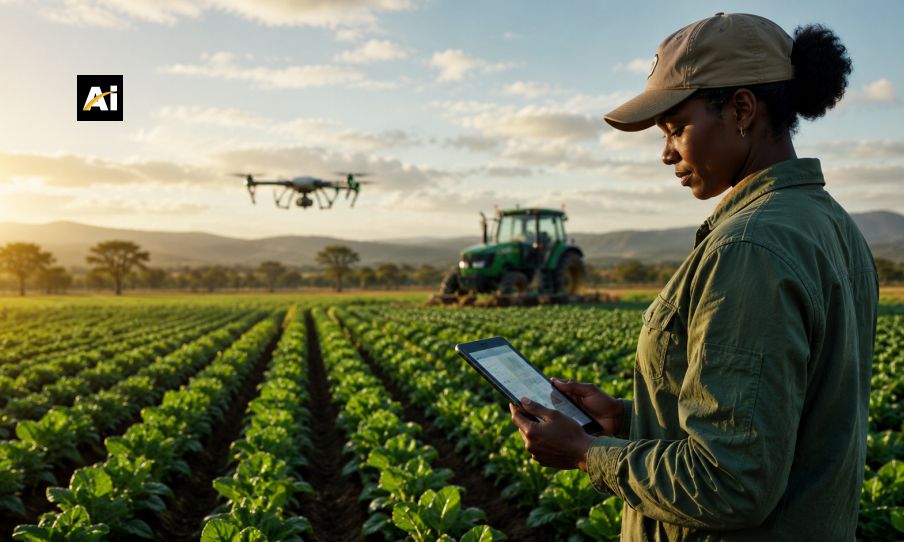
Agriculture has been the backbone of Africa’s economy for centuries. It has been the source of food for many years. Unfortunately, climate change, population growth, limited resources, and poor cultivation methods have affected farmers. But agritech africa is changing this narrative. This company creates value for farmers through technologies that increase their productivity, reduce wastage, and ensure food security. In addition, the agritech africa company ensures farmers can use modern technologies to make their farming activities more productive while also being conscious of environmental issues.
How Agritech Africa Is Revolutionizing Modern Farming
Africa’s agritech industry has undergone many changes, empowering farmers to be more productive through technology. These technologies make the farming process easier for them while also ensuring they are more competitive globally. Farmers are increasingly adopting cell phones, satellite monitoring systems, artificial intelligence, center pivot irrigation, and weather predictions in their activities. The rise and development of agritech africa have brought about many benefits to farmers who were previously using manual methods to carry out their work.
Modern technologies used in farming have enabled the continent to experience new dimensions and opportunities for sustainable farming. Agritech africa’s emergence has been a game-changer in the entire continent as it offers solutions to the problems facing modern farming in the region. The technologies have ensured Africa’s farmers take up better initiatives to increase production and profits while also minimizing the negative impacts they would otherwise cause to the environment. One of the advantages of agritech africa company is that it bridges the information gap between farmers and agricultural technology. Traditionally, farmers usually passed their knowledge from one generation to another. Technology has changed this because it provides relevant information about rainfall, planting, and harvesting, ensuring farmers eliminate wastage while also increasing yields.
Another important development is the rise of digital agriculture across the continent. Through connected devices and smart technologies, digital agriculture allows farmers to monitor crops more efficiently, automate irrigation, and improve resource management. As these innovations become increasingly affordable, more rural communities are embracing technology as part of their daily agricultural practices.
The Growing Role of Digital Agriculture in Food Security
Food security remains one of Africa’s most pressing priorities. Increasing agricultural productivity without placing additional pressure on natural resources requires innovative thinking, and agritech africa is playing a central role in achieving this objective.
Modern farming technologies help farmers identify crop diseases before they spread, optimize fertilizer application, and improve water conservation. These improvements reduce production costs while increasing yields and profitability. The continued growth of digital agriculture is making these solutions accessible even to small-scale farmers who previously lacked advanced farming tools.
Financial inclusion has also improved through digital agriculture platforms. Farmers can now access digital payments, crop insurance, and microloans using mobile technology. This financial support enables them to invest in better seeds, equipment, and sustainable farming methods that contribute to long-term agricultural growth.
As governments and private organizations continue investing in innovation, agritech africa is creating stronger agricultural ecosystems capable of feeding rapidly growing populations while improving rural livelihoods.
Innovation, Sustainability, and the Future of African Agriculture
Sustainability has become a defining feature of agritech africa. Smart irrigation systems reduce unnecessary water consumption, while precision farming minimizes excessive fertilizer and pesticide use. These environmentally responsible practices help preserve soil quality and protect surrounding ecosystems.
The expansion of digital agriculture is also encouraging climate-smart farming. Farmers receive real-time weather alerts that allow them to prepare for droughts, floods, or unexpected climate events. Better planning reduces crop failures and increases resilience against changing environmental conditions.
Young entrepreneurs are playing a significant role in driving innovation within agritech africa. Technology startups are developing affordable farm management software, drone-based crop monitoring, and supply chain solutions designed specifically for African markets. Their innovations are attracting international investment and encouraging collaboration between governments, research institutions, and private businesses.
At the same time, educational initiatives focused on digital agriculture are equipping farmers with the skills needed to adopt new technologies confidently. Training programs, demonstration farms, and online learning platforms are making digital tools easier to understand and implement across different agricultural communities.
Building a Smarter Agricultural Future Across Africa
The future of African agriculture depends on combining traditional farming knowledge with modern innovation. Agritech africa has demonstrated that technology can empower farmers without replacing the wisdom passed down through generations. Instead, it provides better tools for making informed decisions and increasing productivity.
Continued investment in digital agriculture infrastructure, internet connectivity, research, and farmer education will determine how quickly these innovations spread across the continent. Collaboration between governments, technology companies, agricultural organizations, and local communities will remain essential for ensuring that every farmer can benefit from these advancements.
As agricultural challenges continue to evolve, agritech africa stands as a powerful example of how innovation can transform farming into a more productive, sustainable, and profitable industry. With expanding access to digital agriculture, Africa is well-positioned to strengthen food security, improve rural economies, and build a resilient agricultural sector capable of meeting the demands of future generations.