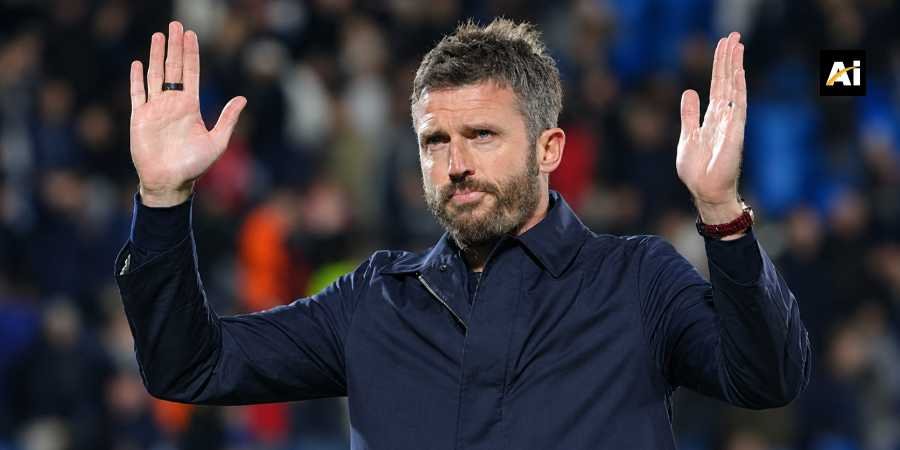
Michael Carrick Faces a Defining Moment as Pressure, Expectations, and Results Converge at Old Trafford
The reality of football management only shows itself when the team refuses to respond to traditional ways of management. An approach that has been working might stop giving the expected results. Those who have been playing confidently will start hesitating, and any choice will be questioned. It is rare for the problems like this one at a club such as Manchester United to stay in the changing room because they concern issues of leadership and the future of the whole club.
Michael Carrick finds himself in exactly this position where he can use his knowledge of the club culture but will be questioned due to his inability to create a winning team.
When Reputation Meets the Reality of Results
Success on the pitch can be an asset to a manager, although it certainly does not guarantee success from the sidelines, as managing involves a skill set all its own including handling personalities, devising strategy, setting standards, and making tough decisions when things get uncomfortable.
Carrick knows how it is to compete at the top level through years of doing just that. However, while his experiences on the pitch can be an asset, managing a team means putting what he learned into practice. Trust is gained through performance in the present.
The challenges Manchester United have faced recently have made the difference between competing and managing very clear indeed. With the team having failed to win any matches in the league and losing a match to Bournemouth in their home stadium, Carrick has had a lot of pressure after being approached about his future with the team.
The initial target seems clear, restoring consistency. To accomplish this, though, more will be needed than an inspiring talk or changing the starting lineup. The coach will have to find out what caused the poor performance and decide what actions can provoke a reaction.
Tactical Clarity Must Become Collective Responsibility
However, a football system only works well when the players know their roles and are comfortable with the choices made on their behalf. It is not possible to address issues such as poor communication, poor transition, poor defensive coordination, and confusion in possession through a system.
Michael Carrick needs to ensure that his players have a clear framework to follow even when there are pressure issues. The players should understand the situations where it is necessary to move forward, where it is appropriate to protect space, how to support other players, and how to react in case of loss of possession of the ball. This should be maintained irrespective of the unpredictable nature of the match.
There is some meaning in selection issues as well. While keeping away an experienced player helps in instilling discipline, it should not occur in a manner that does not justify the objectives of the team. Bringing back a sidelined player into the starting eleven will help in performance if the structure makes it easy for him/her to contribute.
The Dressing Room Is Part of the Solution
While the performance is usually considered in connection with struggling teams, it is necessary to pay attention to the interactions that lead to such results. The team comprises people who vary in terms of the level of experience, goals, personalities, and expectations from the performance. When confidence gets reduced, it may get more complicated.
Michael Carrick should be able to build a situation when the sense of responsibility will not be lost after a defeat. It is crucial to encourage the players who are more experienced to follow the norms introduced by the coaching staff, and give younger players a chance to grow not bearing all the blame.
It does not imply that the conflicts should not be avoided. It only implies that disagreements may become beneficial if the main goal is achieved by each individual. The problem arises when personal disappointment becomes a replacement for professional cooperation or when tactical critique turns into a substitute for collective responsibility.
The role of the leader lies in the fact that expectations should be set to everybody.
The Club Must Look Beyond the Next Result
While winning is always beneficial to reduce pressure, this kind of success is not enough to address underlying issues within the organization. The sustainable success is built through recruiting players, developing the talent, medical assistance, continuity, and reaching mutual agreement on the style of football that the club is supposed to be developed.
The problem faced by Michael Carrick goes beyond selecting the right team for the next match. It should be proved that his approach is able to survive any setbacks and deliver the same results in different matches. This is much more valuable than being temporarily encouraged.
The responsibility also lies with the club management. The manager is not able to build a consistent squad if the priority of the recruitment keeps changing or there is a conflict between long-term and short-term objectives of the club. The accountability should spread all over the organization.
In this regard, Michael Carrick has an opportunity to prove what his leadership represents. He can benefit from bad results to find weaknesses, impose strict discipline on the squad and set the standards. It will be seen later if these decisions bring the positive result.
A Defining Period for Leadership
Football seldom provides a manager the luxury of plenty of time. Matches come up fast, injuries upset everything, and opinion is subject to change with each game. In such an environment, good management demands the capacity to sift noise from the issues at hand.
Now, Michael Carrick must prove that he can transform the pressures that have been brought to bear upon him into effective actions.
Manchester United’s fate will not be decided on the back of just one afternoon or just one management decision. It will come about because of the quality of the choices made over time at the club. As for its manager, it is all about making those choices matter – regaining belief through results, setting standards through actions, and assembling a team with an identity that stands up under pressure.