The housing sector in Africa sits at the intersection of some of the continent’s most pressing economic and social needs. Rapid urbanization, limited access to long-term finance, rising demand for affordable homes, and the need for stronger infrastructure are creating challenges that require more than conventional lending. They call for financial expertise that can connect investment with development and turn housing into a meaningful driver of jobs, growth, and better living conditions.
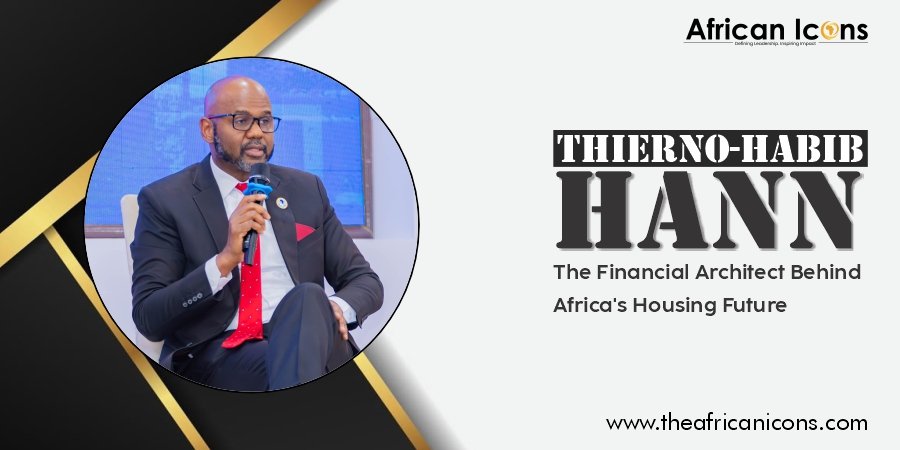
At the centre of this work is Thierno-Habib Hann, Managing Director and CEO of Shelter Afrique Development Bank (ShafDB), whose career has brought together more than two decades of experience across housing finance, capital markets, investment banking, and structured finance. His professional journey has given him a broad understanding of both the financial mechanisms behind real estate development and the wider economic realities shaping Africa’s housing landscape. Today, he brings that experience to an institution focused on expanding housing finance and supporting sustainable urban development across the continent.
Thierno-Habib Hann’s international experience spans development and investment, where he has built a strong track record of delivering complex financial solutions while working with investors, development partners, and other stakeholders. His approach combines financial discipline with a strong interest in development finance and the role capital can play in improving living conditions.
From Global Capital to Africa’s Housing Mission
Thierno-Habib Hann’s career has taken him from the trading floors of Goldman Sachs and JPMorgan to development finance at the International Finance Corporation (IFC) and the World Bank Group. He has contributed to billion-dollar transactions across New York, Africa, and Asia. Yet, throughout that journey, one question continued to stay with him: deals for whom and for what?
Growing up in Guinea, Mr. Thierno-Habib Hann understood that a house in Africa means far more than a roof over a family’s head. It can be a savings account, a workplace, a pharmacy, or a school. A decent home gives families dignity, improves health, and creates the foundation to participate more fully in the economy.
According to the World Bank Group, Africa faces a housing deficit of 53 million units, with the gap growing by 1.5 million homes each year. Mr. Thierno-Habib Hann sees this not simply as a housing challenge, but as an economic opportunity. Roads, ports, and energy receive significant attention, yet housing is the infrastructure where all these systems ultimately converge. Each home can create five to seven direct jobs and support 17 value chains, spanning cement, steel, energy, logistics, and finance.
That perspective led him to ShafDB, where he saw an opportunity to bring his experience in global capital markets to an issue affecting communities across the continent. Better housing, in his view, can contribute to better health, education, employment, industrialization, climate resilience, and wealth creation. He considers himself a product of this linkage, growing up in a teacher’s household in Conakry.
Turning Housing Finance into Development Infrastructure
When Mr. Thierno-Habib Hann assumed the role of Managing Director and CEO, his mandate was clear: transform Shelter Afrique from a housing finance institution into Africa’s Development Bank for Housing. That ambition required three major shifts. The first was moving from financing individual projects to becoming a systemic catalyst. Rather than funding 1,000 homes here and there, ShafDB is focused on developing complete ecosystems involving land, infrastructure, green materials, long-term finance, and mortgage markets.
The second shift was from francophone and anglophone silos towards a truly pan-African development finance institution. ShafDB now has 44 member states, with the African Development Bank (AfDB) and Africa Re among its shareholders. Mr. Hann wants the institution to become the first call for governments, investors, and developers seeking to deliver green and affordable housing at scale across Africa. And he’s not alone. At the African Urban Forum Nairobi Declaration, the Africa Union and its members tasked ShafDB with leading resource mobilization for housing and urban development projects across the continent.
The third shift is from traditional construction finance towards financial innovation. Green bonds, REITs, diaspora housing funds, and local currency solutions are part of this approach. Mr. Thierno-Habib Hann’s ambition is that by 2028, global capital will view housing as economic infrastructure that is bankable, tradable, and aligned with climate priorities.
Breaking the Cost, Land and Finance Barriers
Mr. Thierno-Habib Hann sees four major obstacles standing between Africa and affordable housing at scale. The first is the cost and tenor of capital. African developers can face borrowing costs of 18 to 25 percent for three years while building projects that require 20-year financing at around 8 percent. The numbers simply do not work. Blended finance, guarantees, and local currency funding are therefore essential. This thinking also contributed to the creation of the Alliance of African Multilateral Financial Institutions (AAMFI), which represents 13 member institutions in efforts to mobilize global finance.
Land and infrastructure form the second barrier. Africa has land, but titled and serviced land remains scarce. Governments need to release land and provide bulk infrastructure, areas where ShafDB also co-finances projects.
The third challenge is building materials and green standards. Africa remains too dependent on imports, while construction materials can be considerably more expensive than in other regions. Mr. Thierno-Habib Hann believes local building materials must be industrialized, alongside greater adoption of green standards such as IFC EDGE-certified homes, which can reduce energy costs by around 30 percent.
The fourth is the depth of mortgage markets. In many African countries, less than five percent of bank credit goes towards housing, while fewer than five percent of Africans have mortgages. Expanding mortgage refinancing companies and housing microfinance can help address that gap.
Mr. Thierno-Habib Hann believes the answer is to treat housing as industrial policy rather than simply as a social programme. A development of 10,000 homes in Senegal, for example, can generate demand for Senegalese cement, Ivorian tiles, Ghanaian steel, Cameroonian Aluminium, and African labour. Housing can therefore become a driver of regional trade and industrial growth under the Africa Continental Free Trade Area (AfCFTA).
Restoring Confidence and Building at Scale
Among the achievements during Mr. Thierno-Habib Hann’s tenure, restoring confidence in ShafDB stands out. The institution strengthened its governance, improved its credit profile, and re-engaged member states that had previously paused their capital commitments. ShafDB is now rated and positioned to operate as a bankable institution.
The next step was moving towards larger, more structured pipelines. Instead of scattered projects, the bank began working on programmatic pipelines with sovereigns across countries including Kenya, Nigeria, Rwanda, Côte d’Ivoire, Senegal, Zambia and Zimbabwe. These include green, mixed-use, and climate-smart developments designed to attract private capital.
The drive for greater scale is also behind the planned issuances of the CFA bond in West Africa and the East Africa Bond, which will launch in October 2026 and early 2027 respectively. Mr. Hann sees these instruments as a way to expand the bank’s reach across borders while reducing currency risk for clients.
At global platforms including UNGA, the Africa CEO Forum, and COP, ShafDB has also worked to change how housing is perceived. Mr. Thierno-Habib Hann has consistently presented housing as an economic opportunity rather than charity, describing it as a potential $1.4 trillion infrastructure opportunity for Africa’s urban future. The message has increasingly reached investors, development institutions, and the climate finance community.
Yet, Mr. Thierno-Habib Hann considers the most important achievement to be internal: building a pan-African team that sees ShafDB not simply as a lender, but as a development bank with a clear mission.
Think Like an Investment Banker, Lead Like an African
Mr. Thierno-Habib Hann’s leadership philosophy has been shaped by very different chapters of his career. Goldman Sachs and JPMorgan taught him discipline, financial structuring, and how capital thinks. This experience showed him that investors ultimately look beyond a compelling story to understand risk-adjusted returns.
His time at the IFC and World Bank brought another perspective. Development finance taught him the importance of impact, patience, and alignment with national priorities. A strong transaction that does not fit a country’s priorities, he learned, is unlikely to move forward.
ShafDB has added another dimension: leading through complexity. Managing a development finance institution with 44 member countries requires diplomacy, patience, and the willingness to listen.
Today, Mr. Thierno-Habib Hann describes his philosophy simply: “Think like an investment banker, act like a development banker, lead like an African.” That approach combines commercial discipline with a strong development purpose. ShafDB must remain commercially viable if it is to scale, but its development objectives cannot be compromised. Every transaction should ultimately answer fundamental questions: how many jobs will it create, how many families will benefit, and how much carbon can be avoided?
Making Affordable Housing Investable
Public money alone cannot close Africa’s estimated $100 billion annual housing finance gap. Mr. Thierno-Habib Hann believes the continent must move beyond traditional balance-sheet lending and make greater use of capital market solutions.
At ShafDB, four financing mechanisms are central to this approach. The first is blended finance and first-loss facilities. Mr. Thierno-Habib Hann points to the potential for $1 of catalytic capital to crowd in $10 of commercial funding. Such structures can help bring mortgage rates down from levels of around 20 percent to 10 percent and below.
The second is green bonds and housing Real Estate Investment Trusts (REITs). The objective is to bring pension funds and insurance companies into housing investment in much the same way they invest in roads and other infrastructure. ShafDB’s bond programme in Kenya has already demonstrated the potential of this approach.
Diaspora bonds form the third opportunity. Africans living abroad send around $95 billion home every year, yet less than two percent is directed into structured housing investments. Mr. Thierno-Habib Hann sees an opportunity to channel a greater share of that capital through a diaspora green housing fund.
The fourth is local currency financing. Currency devaluation can quickly undermine housing finance, making long-term local currency solutions essential. ShafDB is working with the AfDB, IFC, World Bank and local mortgage refinancing institutions to develop such mechanisms.
The broader ambition is to make affordable housing an asset class that fund managers in New York, Nairobi, Lagos, Abidjan, and Johannesburg can understand, assess, and invest in.
Blended Finance for Africa’s Housing Ambition
ShafDB’s approach depends on bringing governments, private companies, and development partners into the same financing ecosystem. With governments, the bank provides sovereign advisory and co-financing covering areas such as land, bulk infrastructure, housing policy, and green building codes.
Its private-sector partnerships involve developers and manufacturers who receive project finance, guarantees, and technical assistance to deliver housing at scale while meeting green standards. EDGE certification, solar rooftops, and locally sourced materials are among the areas being promoted.
Development partners add another layer to the model. Institutions including the AfDB, World Bank and IFC, Africa Re, KfW, EIB, EBRD and foundations such as Rockefeller contribute to blended financing structures. The model brings together anchor capital, ShafDB’s project pipeline, private-sector construction capacity, and financial institutions that can take successful programmes to scale.
Mr. Thierno-Habib Hann describes the principle simply: one transaction should help de-risk the next 10. The objective is not to create 10 isolated pilot projects, but a model that can be replicated across Africa’s 54 countries.
Designing Cities Around People and Opportunity
Africa’s rapid urbanization will reshape the continent’s housing needs. Mr. Thierno-Habib Hann points to projections that 70 percent of Africans will live in cities by 2050, with around 800 million people requiring formal housing. He sees this transformation as an opportunity to avoid some of the mistakes made elsewhere.
New cities can be designed around walkability, mixed-use development, and energy efficiency from the beginning. Green standards can reduce energy and water consumption while helping cities adapt to climate pressures. An EDGE-certified home, for instance, can deliver savings of around 20 percent in energy and water.
Urban development must also address where people live in relation to where they work. Mr. Thierno-Habib Hann envisions cities where teachers, nurses, and police officers can reach their workplaces within 30 minutes rather than spending three hours commuting.
Industrialized construction can create another source of opportunity by using local materials and labour. Every 10,000 homes, he notes, can create around 70,000 direct jobs along with many indirect employment opportunities.
The future-ready African city, in his view, is not a luxury smart city. It is an affordable, green, well-located city that creates jobs and supports communities. That is the kind of urban development ShafDB aims to finance.
Keeping Commercial Discipline and Development Impact Together
Commercial viability and development impact are not competing objectives in Mr. Thierno-Habib Hann’s approach. Both are necessary. A development bank that cannot operate commercially cannot borrow, maintain a strong credit profile, or scale its financing. At the same time, an institution that loses sight of development has little reason to exist. Private banks can finance high-end properties, while ShafDB focuses on projects that are commercially viable while reaching lower-income communities.
That requires accepting lower margins in some cases while pursuing greater volume and wider impact. Guarantees can also be used to bring commercial banks into transactions that they might otherwise consider too risky.
ShafDB measures its performance through two ledgers: financial return and developmental return. The second includes jobs created, carbon avoided, families housed, and women becoming homeowners.
A project therefore needs to make sense on both levels. That balance, Mr. Thierno-Habib Hann believes, is central to the role of a development bank.
Four Forces Reshaping Africa’s Housing Future
Looking ahead, Mr. Thierno-Habib Hann sees four trends that will influence the next phase of Africa’s housing and urban development. The first is the emergence of housing as climate infrastructure. Green homes are increasingly positioned to attract climate finance, with solar energy, local materials, and circular design becoming part of financially viable housing projects.
The second is the growing role of capital markets. REITs, green bonds, and diaspora funds can gradually reduce dependence on conventional bank loans and make housing a more liquid investment.
The third is the industrialization of construction. Prefabrication and local manufacturing of building materials could help Africa reduce its dependence on imported construction inputs while developing domestic industries.
The fourth is digital and mortgage inclusion. Mobile mortgages, digital land registries, and rent-to-own platforms could make formal homeownership more accessible to people working in the informal economy.
Mr. Thierno-Habib Hann sees these developments as more than changes within the housing sector. Housing currently contributes less than five percent to GDP in most African countries, compared with around 50 percent in mature economies. The difference, he believes, represents significant room for economic growth.
Advice to the Leaders Shaping Africa’s Future
Mr. Thierno-Habib Hann’s advice to the next generation of African leaders begins with understanding capital. Africa does not lack ideas, he says. What it often lacks is the ability to structure those ideas into investable opportunities. Young leaders should understand how money moves, learn the language of global finance, and understand Wall Street without losing sight of their own countries and communities.
He also encourages them to think beyond individual national markets. Africa’s opportunity lies in connecting markets across the continent, with AfCFTA creating an increasingly important framework for solutions that can operate at scale.
There is also a need for patience. Mr. Thierno-Habib Hann believes leaders should remain impatient about impact while being patient about building institutions. Strong teams, governance, credibility, and sustainable organisations take time.
Housing, food, energy, and digital infrastructure are among the areas where he believes the continent’s future will be shaped.
Turning Africa’s Housing Gap into an Economic Opportunity
Mr. Thierno-Habib Hann’s message to policymakers, investors, and other stakeholders is straightforward: Africa’s housing deficit should not be viewed only as a burden. He sees it as one of the continent’s largest economic opportunities.
Policymakers can begin by making serviced land and green building codes priorities. A single decision around land can unlock significant private investment.
Investors, meanwhile, can view housing alongside sectors such as energy and telecommunications. Mr. Hann sees the sector as a potential $1.4 trillion asset class, combining commercial opportunities with long-term social impact.
The wider challenge is to move beyond an approach that relies primarily on aid. Africa needs bankable, green, and affordable homes that generate employment and create wealth within local economies.
Better housing can contribute to better health, education, and financial security. That makes housing more than a basic need. It becomes part of the foundation for broader economic development.
Mr. Thierno-Habib Hann’s conviction is clear: if Africa can solve its housing challenge at scale, it can unlock opportunities far beyond housing itself. That is the mission he is pursuing through Shelter Afrique Development Bank, and the purpose behind the recognition from The African Icons.