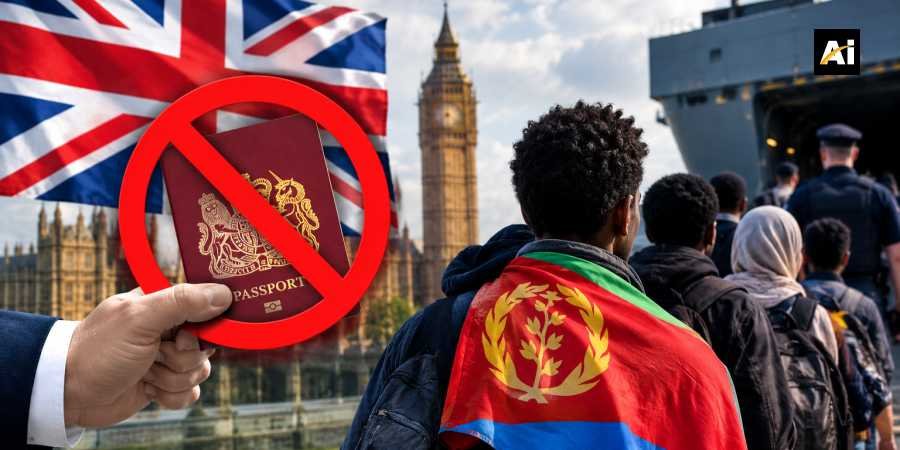
The UK government has threatened to impose a blanket visa ban on Eritrean nationals unless the country agrees to accept more people being returned from Britain, including failed asylum seekers and convicted criminals.
Home Secretary Shabana Mahmood announced the measures on Thursday, saying Eritrean officials and other high-profile visitors had already lost access to the UK’s fast-track visa arrangements. Restrictions have also been introduced for Eritrean diplomats based in Britain, who must now obtain permission from the Foreign Office to travel more than 60 kilometres beyond London.
The Home Office said the action followed Eritrea’s decision to withdraw cooperation on migrant returns earlier this year. British officials said they had spent months attempting to resolve the dispute through private discussions before introducing the restrictions.
The issue has become increasingly significant as Eritreans account for the largest share of people arriving in the UK by small boat in the year ending June 2026.
According to the British government, deportations have remained limited despite the rejection of thousands of asylum applications. Of the 2,626 Eritrean nationals whose asylum claims were rejected over the past four years, fewer than 4% have been deported, official figures cited by the government show.
London argues that effective return agreements are necessary to enforce immigration decisions and remove foreign nationals who have no legal right to remain in the country. The government has warned that countries refusing to cooperate with deportations could face similar visa restrictions.
The proposed blanket ban would mark a further escalation in Britain’s efforts to secure cooperation from foreign governments on migration enforcement. The immediate restrictions on Eritrean officials and diplomats are intended to increase pressure on Asmara to resume return arrangements.
The dispute also highlights the wider challenge facing the UK government as it seeks to reduce irregular migration while securing agreements with countries of origin. Whether the measures lead Eritrea to restore cooperation remains uncertain.