Inflation Deflation and Disinflation: Three Economic Terms People Commonly Confuse
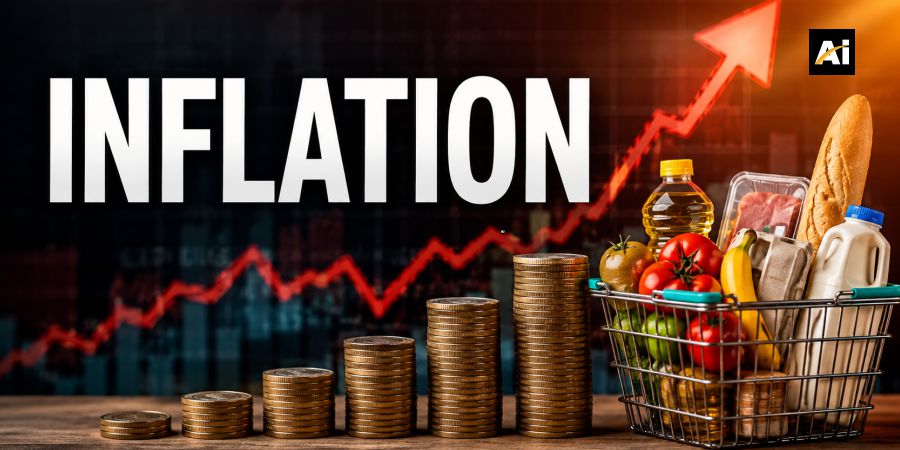
Economics tends to complicate everyday events turnaround in a complicated jargon. When food prices increase compared to last year, rent goes up again, or any family notices their budget no longer goes as far as it used to, the first term that comes to people’s minds is inflation. However, what does happen if prices are still climbing, but at a lower pace? What if prices experience a decline? This is precisely where people often confuse inflation, disinflation, and deflation. The easiest way to learn the distinction among the terms is to know the exact definition of inflation being a continuous increase in prices including many goods instead of just a single one. According to the IMF, inflation is defined as a total price change that gradually happens in the economy over some period of time.
This distinction is important since those three different economic situations may yield various effects in the economy. For instance, if a family hears that inflation has decreased, it may think that prices have started decreasing too. Actually, that is wrong because when inflation goes from 6% to 3%, it does not mean that prices did not go up anymore, they simple increased at a lower pace. The economy enters deflation if inflation falls below zero for an extended length of time. These variations may have an impact on household consumption, company investment, wages, interest rates, and borrowing choices.
What the Inflation Definition Really Tells Us
Inflation can be defined in its simplest terms as the change in price rather than the increase in the prices of particular goods. If the price of coffee goes up due to bad weather, it does not mean inflation has occurred. There must be a general increase in prices for inflation to happen. While the Federal Reserve focuses on the changes in the prices of goods in an economy, instead of the price of one good, the CPI is one of the way of measuring inflation.
The most well-known method is the Consumer Price Index or CPI which measures the changes in prices of different goods and services used by households. The CPI has made it possible for the economists to say that inflation amounts to 3% even if some goods and services became significantly more expensive than last year.
The figures from the CPI show that certain categories of products can move differently. The CPI in the US increased by 3.4% in the year ending July 2026. However, during the same period, with food prices going up by 3.0%, the prices of energy rose by 14.7%. However, in June and July, gas prices decreased by 2.9%. Therefore, rather than describing what occurred to each household’s spending, the total inflation figure provides a general tale.
Disinflation: When Inflation Loses Momentum
At this point, the inflation definition comes in handy. Consider a situation where a given country experiences 7% rise in consumer prices in one year, 5% hike in the second year and 3% rise in the following year. Although inflation has not ceased to exist, it now operates at a different pace. Economists refer to that phenomenon as disinflation.
Disinflation might turn out to be a pleasant surprise for the economies that emerge from the period of unprecedented price growth. If people still receive rising wages and incomes while the price increases are slowing down, it means that the purchasing power of the citizens will gradually increase and the central banks will be satisfied with a long-term decline of the inflation rates as they see the possibility of bringing the inflation growth to the desirable level without the need to actually decrease the prices.
On the other hand, disinflation definitely does not refer to the return to the prices of the past. Let’s say that an item was priced at $100 and, due to inflation, increased to $107 in one year and afterwards the rate dropped to 3%. So, the new price of the good will go up to around $110.21, not back to $100 immediately. This is the aspect of the definition of inflation that may seem illogical in day-to-day situations. Reduced inflation does not necessarily translate into cheaper items; rather, it signifies slower price increases.
Deflation Is Something Different
Deflation – the term often confused with disinflation – means a continuous lowering of price level. According to the IMF, in the case of prolonged deflation, it can cause adverse effects in economy, as the expectation of lower prices may make consumers put off buying and reduce demand for goods and services.
Although falling prices may look great, the reality is that when it happens too often and too long, it will have negative consequences for the economy. A company with lower selling prices will likely cut down on production and investment or even lay off employees. That, in turn, will decrease revenues and making it hard for the companies and borrowers to repay their loans.
Why the Three Terms Matter to Households
Comprehending the distinction between different forms of inflation, such as inflation, disinflation and deflation, will make it easier to grasp the meaning of financial news. For example, imagine a news article that states that inflation dropped from 5% to 2.5%. Some people might question why everything remains expensive at a grocery store, but the truth is people often confuse the inflation rate with the level of prices.
This is also why understanding inflation is critical when it comes to salaries. Let us say that a person’s salary increased by 4% but the prices of consumer goods grew by 6%. Although the amount of money a person receives has grown, their real income has shrunk due to rising prices because their purchasing power has reduced. If inflation grew by 2% and wages have risen by 4%, the person might have also increased their purchasing power. Inflation impacts finances not only because it determines prices, but also shapes “the interrelation between wages, savings and purchase power.”
The Easiest Way to Remember the Difference
Inflation simply means rising prices throughout the economy. Disinflation means prices are rising but at a slower rate. Deflation means that the overall price level is declining for an extended period of time. The direction of the prices means something, but the speed of such changes is important too.
In this regard, it is possible to understand the reason for sometimes contradictory headlines regarding the economy. For instance, “Inflation is decreasing” can be good news even if the consumer does not see his or her prices going down. “Prices are going down” can sound good but sometimes can be worse news if the decline is significant and long-lasting. And the return of prices to moderate inflation does not mean that the previous price level is erased forever.
In fact, the inflation definition means not only remembering a special phrase from any textbook regarding economics, but it also means understanding what happens to the purchasing power.