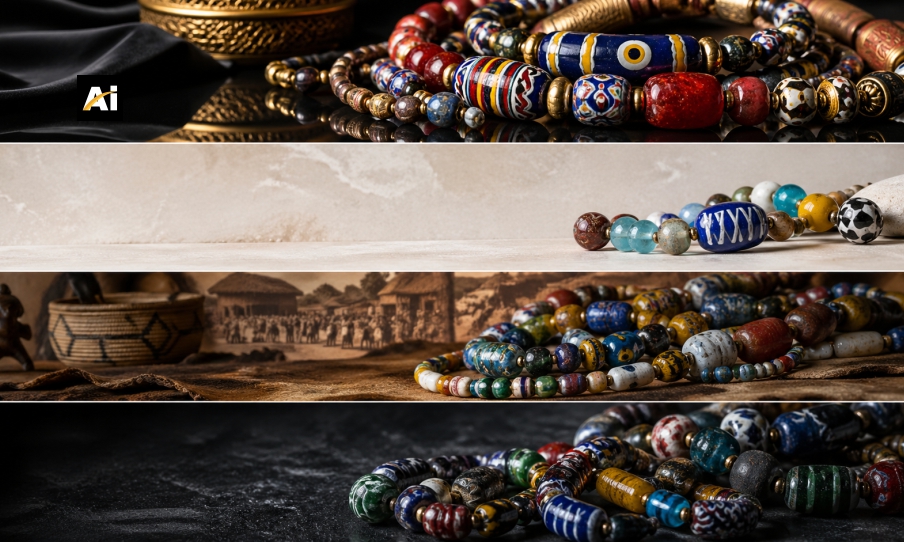
Through centuries of trade and migration and cultural interaction, there is hardly any symbolic treasure trove as african trade beads. These colorful beads are not mere decorative items, they are historical sites that manifest centuries of trade, tradition, and narratives throughout the African continent. Since the days of ancient trade routes, modern markets of jewelry have been crucial in cultural identity and economic exchange. The fact that they were designed, made of different materials as well as crafted makes them very important not only as adornments but also as cultural artifacts holding tales of contact between African and the rest of the world.
The Beads of the Africa Trade-History
History of African trade beads is thousands of years old, when traders of Europe, Middle East and Asia traded beads in exchange with other produce, including gold, ivory, textile and spices in Africa. These beads moved in the major trade routes such as the trans-Saharan routes and the trade ports of the coasts of West and East Africa. Although certain beads were produced in other regions such as Venice, Bohemia, and Netherlands, they soon became part of the African culture and were used by other communities to create their own arts and uses. With time, African craftsmen also started to make the beads of their own in the type of recycled glass, clay, stone, and in the form of seeds. Areas such as Ghana were associated with the art of bead making using glass which was broken and scrap into pieces and crushed along with clay moulds to form bright patterns and textures. These regional adaptations made foreign beads to become this uniquely African blend of foreign craftsmanship and indigenous creativity.
The exchange of beads often represented more than commercial transactions. In many communities, they symbolized diplomacy, alliances, and relationships between traders and local populations. Their circulation across the continent helped create a shared visual language of color, form, and meaning.
Cultural Meaning and Symbolism in African Communities
In many African societies, beads carry deep cultural significance. They are used to communicate social status, age, marital status, spiritual beliefs, and community identity. Different colors and patterns often hold symbolic meanings that vary from one culture to another.
African trade beads frequently appear in ceremonial clothing, traditional jewelry, and ritual adornments. Chiefs, elders, and spiritual leaders may wear elaborate bead necklaces or bracelets to signify authority and respect within the community. Brides in certain regions wear intricate beadwork during wedding ceremonies, representing prosperity, fertility, and family heritage.
Beads also play a role in rites of passage. For example, young girls transitioning into adulthood may receive bead jewelry that symbolizes maturity and readiness for new responsibilities. In other traditions, beads are believed to hold protective or spiritual qualities, serving as amulets that guard against negative energy.
The continued use of these beads in traditional attire highlights their importance as cultural markers that preserve identity and ancestral knowledge. Even as societies modernize, these traditions remain deeply rooted in many communities.
Craftsmanship and Artistic Diversity
One of the most fascinating aspects of african trade beads is the incredible diversity in design and craftsmanship. Artisans across Africa have developed distinctive styles that reflect regional aesthetics and available materials.
In West Africa, recycled glass beads are particularly famous for their bold colors and intricate patterns. The production process often involves grinding glass into powder, placing it into clay molds, and firing it in specialized kilns. After cooling, artisans paint or etch decorative motifs onto the bead surface, creating visually striking designs.
Elsewhere, beads may be carved from bone, stone, or shell. Some communities incorporate brass or copper elements, while others combine beads with leather, fabric, or natural fibers to create layered jewelry pieces. These variations demonstrate how bead-making techniques evolved through generations of experimentation and cultural influence.
Collectors and historians often study these beads to trace historical trade routes and cultural exchanges. The shapes, colors, and manufacturing techniques can reveal where a bead was produced and how it traveled across continents before reaching African markets.
Global Popularity and Modern Relevance
Today, african trade beads are appreciated worldwide for both their beauty and historical significance. Designers, collectors, and cultural enthusiasts incorporate them into contemporary jewelry, fashion accessories, and home décor. Their vibrant appearance and handcrafted character make them especially appealing in an era where authenticity and sustainability are highly valued.
Museums and cultural institutions also display these beads as important artifacts that represent Africa’s role in global trade history. Through exhibitions and educational programs, they help audiences understand how objects as small as beads could connect distant cultures and economies.
In modern markets, artisans and small businesses continue to produce bead jewelry inspired by traditional techniques. This ongoing craftsmanship provides economic opportunities for local communities while keeping ancient artistic traditions alive. Many buyers today seek ethically sourced and handmade products, making these beads even more relevant in global craft markets.
Despite their worldwide popularity, the deeper value of african trade beads lies in their ability to tell stories. Each bead represents a journey—across oceans, deserts, and generations. They remind us that cultural exchange has always been part of human history and that art can carry meaning far beyond its physical form.
As interest in heritage crafts continues to grow, these beads remain powerful symbols of history, identity, and creativity. Their enduring presence in both traditional ceremonies and modern fashion ensures that their legacy will continue to be celebrated for generations to come.