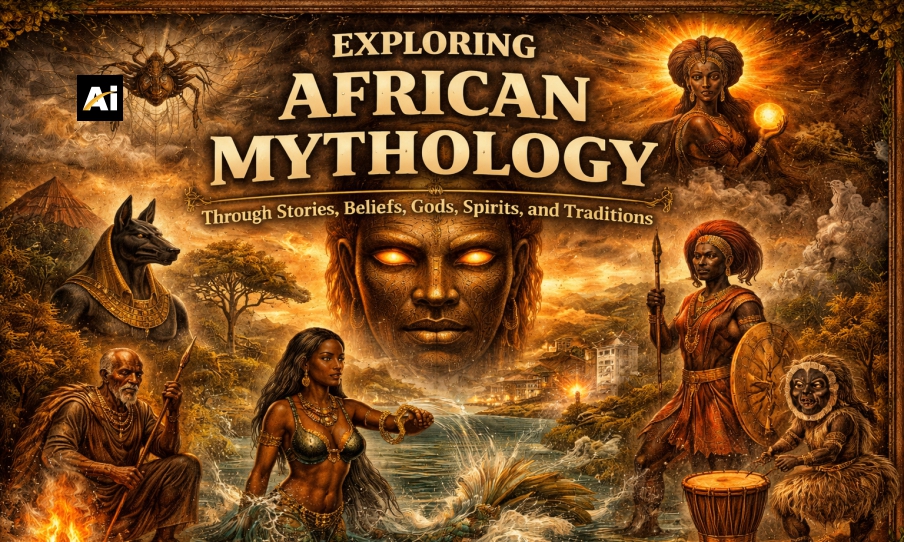
Beneath every tale lies a rhythm older than memory – Africa’s myths shape how communities see beginnings, people, earth. Stories travel by voice, shifting across time to reveal why skies thunder or rivers bend. Life here gains meaning when seen alongside invisible threads, not simply told as battles between deities and chaos. Meaning hides within moments – a gesture, a silence, the way fire dances at night. These beliefs are less about worship, more about walking steadily through questions without answers.
The Roots And Spoken Stories Of Early Faiths
Stories traveled by voice long before pages did across Africa. Knowledge stayed alive not in books but in spoken words passed at dusk near fires. Those who remembered – elders, holy figures, keepers of song – carried tales forward like breath through generations. Myths found home in rhythm, in chant, in the steady pulse of voices trained over lifetimes.
World beginnings fill these tales, along with reasons behind nature’s patterns and guidance on living. Across places, creation stories differ greatly. A distant god might craft the planet then step away in some versions. Other traditions show a hands-on force still guiding people today.
Stories changed slowly, handed forward by word of mouth across generations. Shaped by fresh places and shifting lives, each telling took on subtle differences. Still, their core stayed visible beneath the shifts. Time moved on, yet meaning held fast through adaptation.
Gods, Spirits, and the Role of the Supernatural in Daily Life
A central feature of african mythology is the belief in a spiritual world that exists alongside the physical one. This realm is inhabited by gods, spirits, and ancestors who influence everyday life. Many cultures believe in a supreme being, often seen as the creator of all things, but not always directly involved in human affairs.
Instead, various deities and spirits act as intermediaries, each associated with specific elements such as water, fertility, war, or wisdom. These spiritual entities are respected and honored through rituals, offerings, and ceremonies. People often seek their guidance for important decisions, health, and protection.
Ancestors hold a particularly important place in african mythology. They are believed to watch over their descendants, offering wisdom and safeguarding the community. Maintaining a good relationship with ancestors is considered essential for harmony and prosperity.
This interconnected view of life—where the spiritual and physical coexist—shapes how individuals interact with their environment and with each other.
Symbolism, Folklore, and Moral Lessons in Traditional Narratives
African mythology is rich in symbolism and layered meanings. Stories are rarely just tales for entertainment; they carry deep moral and philosophical lessons. Through animals, tricksters, heroes, and spirits, these narratives explore themes like honesty, bravery, greed, and justice.
Trickster figures are especially common, often portrayed as clever but flawed characters who challenge norms and teach lessons through their actions. These stories highlight the complexity of human nature and encourage critical thinking.
Folklore also serves as a way to preserve cultural identity. Each story reflects the values, fears, and aspirations of the community it comes from. Whether it is a tale about a wise king, a mischievous spirit, or a talking animal, every narrative contributes to a broader understanding of life.
In african mythology, storytelling is not just about the past—it is a guide for living in the present and shaping the future.
Modern Relevance and Cultural Revival in Contemporary Society
Despite the influence of globalization and modern religions, african mythology continues to hold significance in many communities. In recent years, there has been a renewed interest in traditional beliefs and cultural heritage. Artists, writers, and filmmakers are drawing inspiration from these ancient stories, bringing them to new audiences.
This revival is not just about nostalgia; it is about reclaiming identity and celebrating indigenous knowledge. Festivals, educational programs, and digital platforms are helping preserve and share these traditions with younger generations.
At the same time, african mythology is finding its place on the global stage. Elements of these stories are influencing literature, fashion, music, and even popular media. This growing recognition highlights the universal appeal of these narratives and their ability to connect people across cultures.
A Living Legacy of Stories and Wisdom Across Generations
African mythology remains a powerful testament to the continent’s cultural depth and resilience. It continues to inspire, educate, and connect people to their roots, offering timeless wisdom that transcends generations.
Read Also : African Trade Beads: History, Cultural Significance, and Global Influence