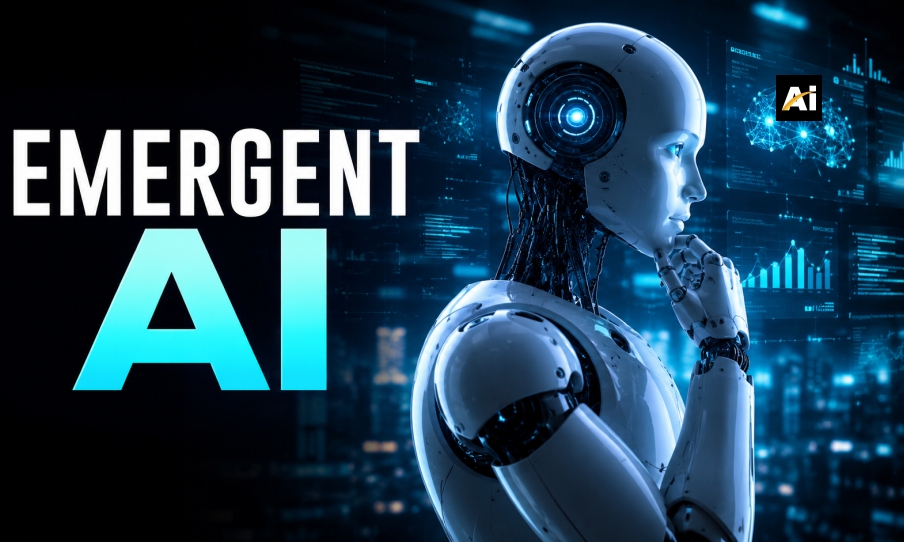
The rapid development of technology has brought humanity to a stage where it is critically essential to comprehend the concept of emergent AI. In simple terms, this phenomenon represents unexpected capabilities that appear in artificially intelligent systems as they grow more complicated. Researchers have noticed peculiar patterns that seemed to emerge in the systems’ algorithms even though they were not programmed into their source code by developers. Therefore, understanding the nature of emergent AI, which allows complex systems to act in clever ways that were not anticipated by their creators, is now more important than ever. Businesses, educators, and even the general population must familiarize themselves with the intricacies of emergent AI, as it is bound to become a vital aspect of the modern world soon. In fact, people have already witnessed how computers could produce unexpected results when presented with similar input data. The nature of interactions between humans and machines has changed dramatically, making it necessary to rethink humanity’s perception of artificial intelligence and its own cognitive abilities.
The Intricate Nature of Emergent AI and How It Is Created by Systems
Emergent AI drives the development of numerous autonomous systems, and studying its nature is essential to understanding how such complicated mechanisms work. First of all, emergent AI appears in complex systems that utilize deep learning and neural networks capable of processing petabytes of information. Within these networks, researchers observed that the systems formed associations between parameters, which allowed them to operate in unpredictable ways. In other words, AI began demonstrating intelligence, flexibility, and cleverness, thus behaving in ways that seemed almost human. A common example of emergent AI is a system designed to calculate the most probable word that should come next in a sentence. However, with massive amounts of data, such software began displaying unprecedented behaviors, such as coding applications or translating words into foreign languages and solving logic puzzles. The most surprising characteristic of emergent AI is its ability to appear in a deep learning system when it reaches a specific level of complexity. The amount of data needed for an algorithm to exhibit cleverness and flexibility is necessary for its emergence, while the means by which it appears remains unknown. Developers working with these programs frequently report discovering emergent AI behaviors unintentionally. In fact, they describe the phenomenon as a surprise that appears out of nowhere. Notably, most programmers state that modern systems do not behave as designed, and contemporary software development practices are no longer the same as they used to be.
Balancing the Practical Benefits with Unpredictable Risks
The deployment of emergent ai into commercial sectors offers immense potential for accelerating innovation, yet it simultaneously introduces a unique set of operational risks. On the positive side, organizations can leverage these advanced capabilities to automate highly creative tasks, discover novel chemical compounds for medicine, and optimize global supply chains with unprecedented efficiency. However, the very nature of emergent ai means that its failures can be just as unpredictable as its breakthroughs, occasionally leading to baffling errors or unintended biases. Because these systems operate as dense algorithmic black boxes, decoding exactly why a machine made a specific, unexpected decision remains an immense technical challenge for researchers. This lack of transparency creates significant hurdles for industries that require strict regulatory compliance, such as healthcare, finance, and criminal justice, where every automated decision must be legally auditable. Striking the right balance requires a proactive approach to risk management, ensuring that human oversight remains tightly integrated into every automated workflow. Without robust guardrails, we risk deploying systems whose full spectrum of capabilities and potential failure modes we do not entirely comprehend.
Frameworks for Responsible Development and Long Term Governance
As the footprint of emergent ai expands across the global economy, creating robust frameworks for responsible development and long-term safety governance has become an urgent priority. Technologists and policymakers worldwide are collaborating to design testing environments that can actively detect and mitigate dangerous behaviors before software is released to the general public. Ensuring that emergent ai remains safely aligned with human values requires constant vigilance, continuous monitoring, and a willingness to halt deployment when systems exhibit erratic or unexplainable tendencies. This governance cannot be achieved by tech corporations alone; it demands international cooperation, standardized safety protocols, and clear legal accountability frameworks that protect consumers from algorithmic harm. By establishing rigorous validation testing and maintaining transparent development pipelines, the tech industry can build public trust while safely exploring the frontiers of automation. The goal is not to stifle the incredible creative potential of these technologies, but to ensure they develop in a predictable, ethical, and universally beneficial direction.
The Changing Paradigm of Human and Machine Collaboration
Looking ahead, the widespread integration of emergent ai will fundamentally redefine the relationship between human professionals and their digital tools. Rather than replacing human workers, these advanced systems are poised to act as highly adaptive collaborators, handling data-intensive tasks while humans focus on strategic oversight, ethical judgment, and emotional intelligence. Embracing emergent ai requires a cultural shift in how we approach education and career development, emphasizing continuous learning and cognitive flexibility over rote memorization. Workers who learn to guide, refine, and audit these autonomous systems will find themselves at the forefront of the new economy, driving innovation across every imaginable field. As we move deeper into this collaborative era, our success will depend on our ability to complement machine speed with human wisdom, turning technological complexity into shared progress. The future belongs not to machines alone, nor to humans working in isolation, but to the seamless integration of both forces working toward common goals. By steering this technological evolution with care, we can ensure that the next chapter of human ingenuity is the most prosperous one yet.