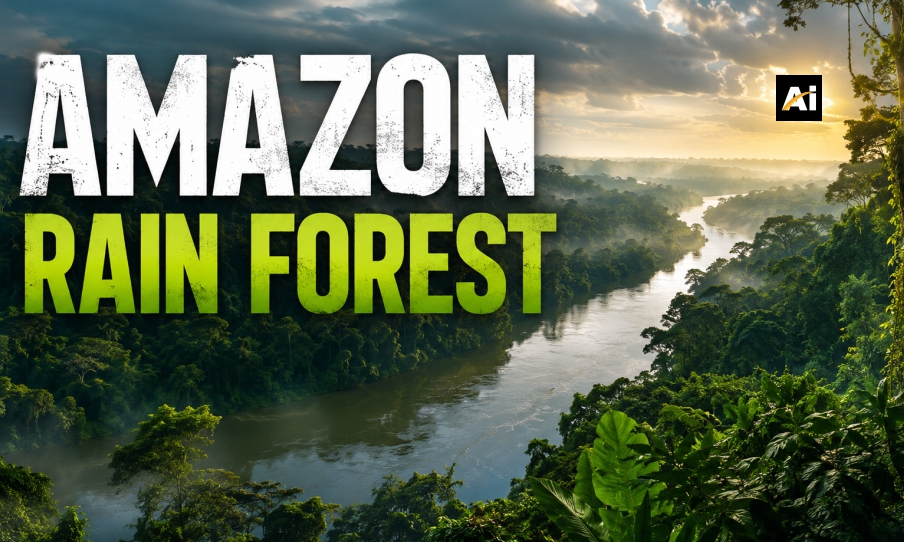
The amazon rain forest is one of Earth’s most precious jewels. It possesses biodiversity in the green jungle, which is unique in its kind. Stretching over millions of square kilometers in South America, the amazon rainforest covers one of the largest areas in the world. This green belt is not only essential for the people but also for the planet as it helps maintain the balance of oxygen on Earth’s atmosphere. It has attracted human attention for centuries and is home to millions of different species of plants, animals, and human beings. But to understand the importance of the amazon rainforest, one needs to look closer and deeper inside the leafy greenery. And the preservation of this extraordinary piece of nature is essential for every person on the planet.
The amazon rain forest’s architecture is crucial to its structure and the biodiversity it possesses with it.
The amazon rainforest contains four distinct layers, each being unique in its climate, size, and species. The first layer is known as the emergent layer, allowing tall trees to grow from the canopy. These giants grow to great heights so the animals may nest on them without being disturbed by the weather. It is the highest layer of the rainforest, and it is where eagles and bats often fly around. Coming down below it, one will see the second layer, also known as the main canopy. It is the thickest layer of them all and hosts the most significant amount of vegetation. Most of the rainforest’s energy is dedicated to its growth, and it provides food and shelter for nearly ninety percent of the amazon’s species. The third layer is the one found beneath the main canopy. It is called the understory, and it is here where shrubs, jaguars, and tree frogs reside. It has a more humid and darker climate due to the insufficient amount of sunlight that can penetrate through the top layer. And finally, the fourth layer is the forest floor. It is covered with leaf litter, which means organic life is decomposed and returned to the earth to nourish the plants. That is why the amazon rainforest is so densely covered with green and so full of life.
The Global Climate Engine and Carbon Sink
Beyond its staggering beauty and rich biodiversity, the amazon rain forest functions as a massive, organic climate control system for the entire planet. Through the process of photosynthesis, the billions of trees within the amazon rain forest absorb immense quantities of carbon dioxide from the atmosphere, effectively storing it within their wood and roots. This function as a global carbon sink is absolutely crucial in mitigating the impacts of climate change and keeping global temperatures stable. Furthermore, the amazon rain forest generates its own weather patterns through a phenomenon known as evapotranspiration, where trees release water vapor back into the air, creating massive aerial rivers that distribute rainfall across the continent. When large sections of the forest are degraded, this water cycle weakens, which can lead to severe droughts in agricultural zones far beyond the borders of the jungle itself.
Modern Threats to the Great Wilderness
Despite its vast size and apparent resilience, the amazon rain forest faces unprecedented pressures from human activities that threaten to permanently alter its landscape. Large-scale agriculture, cattle ranching, logging, and infrastructure development have contributed to significant habitat fragmentation across several nations. As roads cut through the dense foliage, they open up previously untouched areas of the amazon rain forest to further exploitation and degradation. Climate change exacerbates these local pressures, leading to higher temperatures and more frequent wildfires that the forest is not naturally adapted to handle. Environmental scientists warn that if deforestation surpasses a critical threshold, the amazon rain forest could hit a tipping point, gradually transforming from a lush, wet woodland into a dry savanna, a shift that would release catastrophic amounts of stored carbon into the atmosphere.
Collaborative Paths for Future Conservation
Protecting the amazon rain forest requires a multifaceted approach that combines local indigenous stewardship with robust international cooperation and economic incentives. Indigenous communities have lived in harmony with the amazon rain forest for centuries, practicing sustainable resource management that preserves the integrity of the land while supporting human livelihood. Empowering these communities and legally recognizing their territorial rights has proven to be one of the most effective methods for preventing illegal logging and clearing. Additionally, global initiatives that value the standing forest through carbon credits and sustainable eco-tourism provide alternative economic pathways for developing nations. By fostering international partnerships and enforcing strict environmental regulations, humanity can ensure that the amazon rain forest continues to thrive as a beacon of natural wonder, clean air, and biological diversity for generations to come.