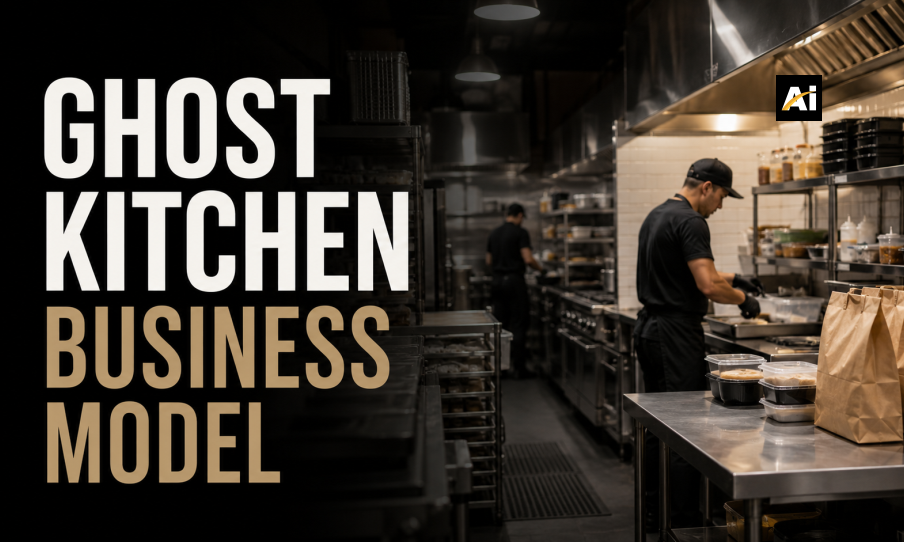
Right now, restaurants are changing fast because of tech – and right in the middle is the idea of kitchens without dining rooms. Opening a new place used to mean finding a great street-level spot, spending big on decor, plus staffing lots of servers for guests eating inside. Suddenly, apps that deliver meals rewrote everything, making space for leaner ways to operate. Now chefs and business owners are shifting quickly – not because it’s trendy but because these setups skip heavy expenses like rent and service staff. No seating means less cost, tighter focus on takeout, nothing extra.
Pulling the kitchen away from where people eat lets food companies run completely from high-efficiency cooking hubs. Because today’s meal scene moves fast, knowing how ghost kitchens really work matters more than ever. This isn’t just some short-lived moment sparked by lockdowns – it’s how eating out has quietly changed for good. When folks now expect quick deliveries straight from apps, behind-the-scenes kitchens gain ground without warning. Old-school restaurants must adjust – not because they want to, but because staying still means falling behind slowly.
The Inner Workings of Online Only Restaurants
Understanding this system means watching a virtual restaurant work – no shoppers walking in. A food brand lives only on apps such as UberEats or DoorDash, maybe even its own site. Once someone orders online, the request heads straight to a central cooking hub placed where deliveries are frequent but space is cheap. Because of this smart location choice, owners skip expensive downtown rents. They ignore flashy signs, cozy lighting, everything meant for diners who never show up.
Instead, every single square foot of the facility is engineered purely for cooking efficiency, rapid packaging, and fast courier handoffs. This hyper-focus on volume and speed allows operators utilizing the ghost kitchen business model to maximize their daily output while keeping labor costs exceptionally low. Since there are no hosts, servers, or busboys to manage, the entire workforce is concentrated in the back of the house, working strictly on food preparation and order accuracy. This lean operational structure ensures that capital can be funneled directly into sourcing high-quality ingredients and optimizing cooking technologies to keep ticket times down.
Maximizing Profit Margins and Minimizing Capital Risk
The most compelling argument for choosing the ghost kitchen business model over a traditional setup is the dramatic reduction in financial risk. Launching a standard restaurant can easily cost hundreds of thousands of dollars in upfront capital, much of which is sunk into non-revenue-generating assets like dining furniture, ambient lighting, and storefront signage. By contrast, adopting the ghost kitchen business model allows brands to launch in a fraction of the time with a fraction of the capital. Many operators choose to rent space from large-scale provider networks that supply fully equipped, licensed commercial kitchens, reducing the initial barrier to entry to a minor security deposit and basic ingredient inventory.
Furthermore, the inherent flexibility of the ghost kitchen business model gives chefs the unprecedented freedom to experiment with diverse culinary concepts simultaneously out of the exact same space. For instance, a single operator can run a gourmet burger brand, a healthy salad concept, and a late-night taco spot out of a single kitchen unit using the same core staff and equipment. If one concept fails to gain traction on the delivery apps, the operator can easily shut it down and launch a brand-new menu within days without facing the crushing financial ruin that typically accompanies a traditional restaurant closure. This ability to continuously pivot and adapt to real-time market data is why the ghost kitchen business model has become a favorite framework for modern food tech startups.
Navigating the Marketing Challenges of a Screen Only Brand
While the financial benefits are undeniable, operating without a physical storefront introduces a unique set of obstacles, particularly regarding brand discovery. In the traditional world, a beautiful sign and a busy sidewalk serve as a permanent, passive advertisement for your business. However, when you rely entirely on the ghost kitchen business model, your restaurant is completely invisible to the physical world. Your entire customer acquisition strategy hinges on algorithms, search engine visibility, and paid digital advertising. Success within the ghost kitchen business model requires a deep, sophisticated mastery of digital marketing, app store optimization, and targeted social media campaigns to stand out in a highly crowded digital marketplace.
If a virtual restaurant fails to rank near the top of a delivery app’s search results for specific food categories, it effectively ceases to exist. Therefore, businesses built on the ghost kitchen business model must allocate a significant portion of their cost savings toward digital promotions, review generation, and loyalty programs. Building trust with a consumer base that will never see your chefs or walk through your doors is a steep mountain to climb. Brands must leverage high-quality food photography, transparent ingredient sourcing, and flawless customer service to foster long-term community loyalty from behind a digital screen.
The Long Term Outlook for Shared Culinary Spaces
Looking toward the horizon, it is abundantly clear that the delivery-first economy is here to stay, and the ghost kitchen business model will evolve alongside it. We are already seeing the emergence of mega-facilities that house dozens of individual virtual restaurants under one roof, sharing communal loading docks, dishwashing stations, and ingredient storage walk-ins. This shared infrastructure further optimizes the ghost kitchen business model, driving down overhead costs to levels that were completely unimaginable a decade ago. As automation, kitchen robotics, and autonomous drone delivery technologies mature, these digital fulfillment hubs will become even more efficient. The ghost kitchen business model represents far more than a clever real estate play; it is a fundamental reconfiguration of the global food supply chain designed to satisfy a society that demands everything at the push of a button.