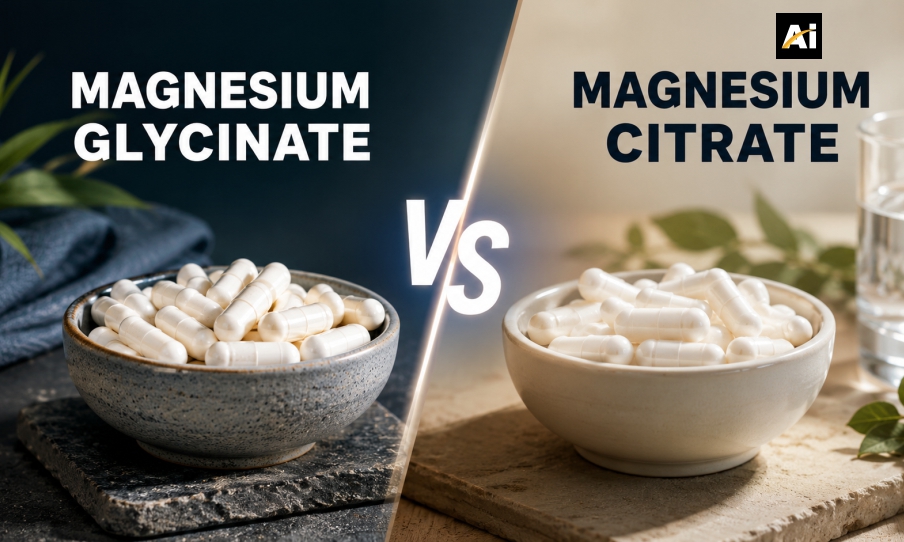
Magnesium is an essential mineral that participates in hundreds of biochemical reactions that occur in the human body. It is critical for normal muscle function and nerve conduction, energy conversion, heart function, and bone integrity. In today’s world, there is a deficiency of this mineral in the diet of many people. Consequently, magnesium supplements have become extremely popular. However, there are many different types of magnesium, and it can be complicated to choose between them. One of the most common dilemmas is magnesium glycinate vs. citrate.
These two supplements have a decent bioavailability, but they are slightly different, as one of them is more focused on calming the nervous system and the other is more intended for relieving occasional constipation.
Before discussing magnesium glycinate vs. citrate, let’s take a closer look at what each of these supplements consists of. Magnesium glycinate contains magnesium ions and glycine, an amino acid with calming effects. In turn, magnesium citrate is made of magnesium and citric acid.
Both of these substances are easily absorbed by the human body, but they have some distinct advantages over each other.
For example, magnesium glycinate is a perfect supplement for people who want to improve their sleep quality and reduce stress levels. It is easily absorbed and does not irritate the gastrointestinal tract, which makes it safe for everyday use. On the other hand, magnesium citrate is often used to aid in digestion due to its ability to draw water into the intestines.
Both forms deliver magnesium effectively, but their secondary effects make them suitable for different situations.
Comparing Benefits and Everyday Uses
The discussion around magnesium glycinate vs citrate often comes down to why someone wants to take magnesium in the first place.
Magnesium glycinate is widely chosen by people seeking better relaxation, improved sleep quality, reduced muscle tension, or support during periods of stress. Since glycine itself has calming properties, this combination may help promote restful sleep without causing digestive discomfort. Individuals who experience muscle cramps after exercise or frequent tension-related discomfort often prefer this option because it can be taken regularly without unwanted gastrointestinal effects.
Magnesium citrate is often selected for digestive support. If someone experiences occasional constipation, this form can encourage bowel movements while also correcting magnesium deficiency. It is also frequently recommended for people whose digestive system tolerates mild laxative effects without difficulty.
For individuals who simply want to improve their daily magnesium intake without affecting digestion, glycinate is generally considered the more comfortable choice. However, for those needing digestive assistance, citrate provides an added advantage beyond mineral supplementation.
Absorption, Side Effects, and Safety
One reason magnesium glycinate vs citrate remains a popular comparison is that both forms are considered among the most absorbable magnesium supplements available.
Absorption alone is rarely the deciding factor because each performs well. Instead, tolerance often becomes more important. Magnesium glycinate usually causes minimal digestive upset, even at moderate doses. This makes it suitable for people with sensitive stomachs or those who need consistent daily supplementation over long periods.
Magnesium citrate’s excellent absorption is paired with its osmotic effect, meaning it draws water into the intestines. While beneficial for relieving constipation, excessive intake may lead to loose stools or diarrhea. For some individuals, even moderate doses can produce noticeable digestive changes.
Regardless of the form you choose, taking magnesium with food may improve tolerance. Following the dosage recommended by a healthcare professional or the product label also helps minimize side effects. People with kidney disease or other medical conditions should consult a healthcare provider before starting any magnesium supplement because excess magnesium may accumulate in the body.
Which One Should You Choose?
Choosing between magnesium glycinate vs citrate depends more on your health goals than on which supplement is objectively better.
If your primary concerns involve sleep quality, anxiety, muscle relaxation, or long-term magnesium maintenance, magnesium glycinate is often the preferred option. Its gentle nature and calming characteristics make it suitable for everyday use.
If your goal includes relieving occasional constipation while increasing magnesium intake, magnesium citrate may be more appropriate. It provides the benefits of magnesium supplementation alongside digestive support.
Lifestyle also plays a role in the decision. Athletes recovering from strenuous workouts, professionals managing chronic stress, or individuals looking for better sleep frequently lean toward glycinate. Meanwhile, people dealing with irregular bowel movements may appreciate citrate’s additional digestive benefits.
It’s also worth remembering that supplements work best when combined with a balanced diet rich in natural magnesium sources. Foods such as leafy green vegetables, almonds, pumpkin seeds, black beans, avocados, and whole grains contribute significantly to daily magnesium intake and support overall health.
Quality matters as well. Choosing supplements from reputable manufacturers that undergo third-party testing can help ensure purity, accurate labeling, and consistent potency. Reading ingredient labels carefully also helps avoid unnecessary additives or allergens.
Rather than viewing the decision as one supplement being superior to the other, think of them as tools designed for different needs. Both are effective at increasing magnesium levels, but each offers unique advantages depending on your individual circumstances.
Ultimately, the choice between magnesium glycinate vs citrate should reflect your symptoms, digestive tolerance, and wellness goals. Understanding how each form works allows you to select the supplement that best fits your lifestyle while supporting healthy magnesium levels for the long term.