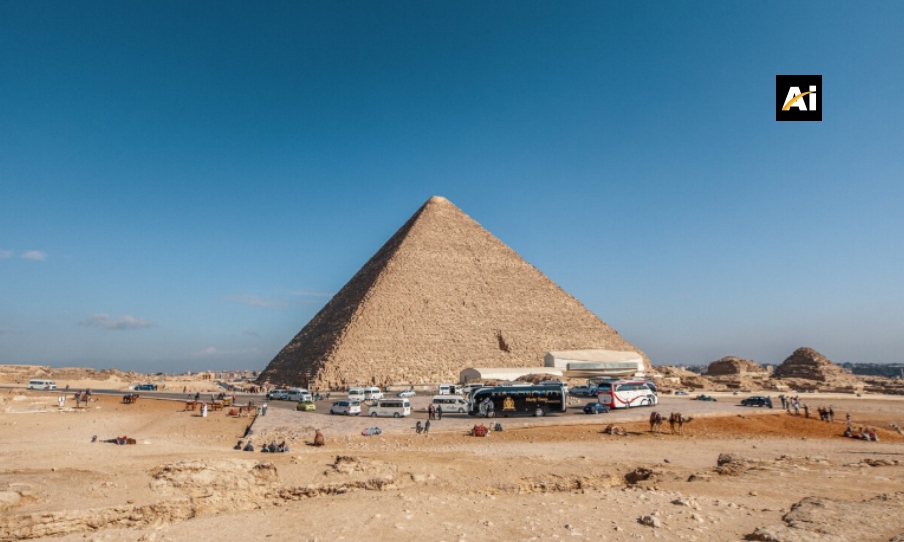
Out there beyond the dunes, time feels different near the only ancient wonder still breathing. That pyramid built by Khufu has seen kings vanish and cities crumble while holding its silence for more than 4000 years. Walking through Giza’s burial grounds changes something quiet inside because it isn’t just about seeing old stones – it pulls you straight into what humans dared to build long ago. Hot light bounces off pale desert rock underfoot as massive stone pieces lie stacked high, each one heavier than any modern truck, marking where pharaohs stepped toward eternity.
Navigating the Giants of the Fourth Dynasty
Standing out to nearly everyone are three huge constructions from the Fourth Dynasty of Egypt’s Old Kingdom. Not just one grabs attention – though many focus on the largest, called the Great Pyramid, the others hold their own quiet power. The structure made for Khafre tends to look loftier, even if it isn’t, due to its perch on elevated ground. Atop that rise, a remnant of bright white limestone still clings to its summit, giving clues about how these buildings once shone.
Inside those towering structures, visitors can step into hidden rooms when they join Giza Necropolis excursions. Up a tight sloping tunnel in the Great Pyramid lies the King’s Chamber – its walls made of solid granite, holding a coffin long emptied. The moment hits hard: stale air, deep quiet, weight pressing from every direction. Beyond the massive stones, tiny pyramids named for queens sit close by, along with flat-topped tombs where nobles were laid to rest. Life after death once pulsed here, organized, layered, full of motion even in stillness.
The Great Sphinx and the Secrets of the Valley Temple
No exploration of the plateau is complete without a face-to-face encounter with the Great Sphinx. Carved from a single outcropping of limestone, this mythical creature with the body of a lion and the head of a pharaoh has guarded the necropolis for centuries. Most high-quality giza necropolis tours include a visit to the adjacent Valley Temple of Khafre. This structure is a marvel of megalithic architecture, featuring massive pink granite pillars and an alabaster floor that still shines under the Egyptian sun.
The temple was the site of the complex mummification rituals and the “Opening of the Mouth” ceremony, intended to allow the deceased king to eat and breathe in the next world. Standing in the very spot where these ancient rites were performed adds a layer of spiritual depth to your visit. From the viewing platforms near the Sphinx, you can capture the classic panoramic shot of all three pyramids, a perspective that has remained largely unchanged since the days of the explorers.
Timing and Preparation for Your Desert Adventure
The environment at Giza is as formidable as the monuments themselves. To truly enjoy giza necropolis tours, timing is everything. The peak season runs from October to April, when the temperatures are mild and the desert breeze is refreshing. If you choose to visit during the shoulder months of March or November, you can often avoid the largest crowds while still enjoying perfect weather.
Early morning is undoubtedly the best time to arrive. Being among the first through the gates allows you to see the pyramids as the soft morning light hits the limestone, creating a golden glow that is a photographer’s dream. It also ensures you beat the midday heat and the arrival of large bus groups. Many modern giza necropolis tours now offer “sunrise” or “late afternoon” options to maximize the aesthetic beauty of the site. Remember to carry plenty of water, wear breathable clothing, and perhaps consider a camel ride across the dunes for a truly cinematic view of the entire complex from the “Panorama” point.
Beyond the Pyramids at the Grand Egyptian Museum
As we move through 2026, the experience of visiting Giza has been forever changed by the full opening of the Grand Egyptian Museum (GEM). Located just a stone’s throw from the plateau, this state-of-the-art facility houses the complete collection of King Tutankhamun’s treasures and thousands of other artifacts that were once found within the tombs you just explored. Integrating giza necropolis tours with a visit to the GEM provides a “full circle” historical narrative.
You can walk through the actual burial grounds in the morning and view the exquisite jewelry, statues, and funerary furniture in the afternoon. This synergy between the archaeological site and the museum offers a comprehensive understanding of how the ancient Egyptians lived, worked, and prepared for eternity. Whether you are a solo traveler or visiting with family, the combination of the ancient stones and the modern museum makes for a world-class cultural pilgrimage.
Planning Your Ultimate Egyptian Odyssey
Choosing the right itinerary is essential for a stress-free visit. While some travelers prefer to explore independently, the expertise provided by professional giza necropolis tours is invaluable for navigating the site’s vastness and understanding the subtle hieroglyphs that adorn the tomb walls. Guides can point out “hidden gems” like the Workers’ Village, where the craftsmen who built these wonders lived, or the Solar Boat pits that once housed ceremonial vessels meant for the sun god’s journey across the sky.
In a world that is constantly changing, the Giza Plateau remains a steadfast reminder of human capability and the quest for immortality. By selecting well-organized giza necropolis tours, you ensure that your visit is respectful of the site’s preservation while providing you with memories that will last a lifetime. As you leave the plateau and look back at the silhouettes of the pyramids against the setting sun, you realize that you haven’t just seen a monument—you’ve touched the very dawn of civilization.
Embracing the Legacy of the Pharaohs
The magic of the Giza Plateau lies in its ability to make the ancient feel immediate. Every step on the sand, every touch of the weathered stone, and every story shared by a knowledgeable guide during giza necropolis tours contributes to a deeper appreciation of our collective history. As tourism evolves in 2026, there is a stronger focus on sustainable visits and preserving the integrity of these sites for future generations.
By participating in responsible giza necropolis tours, you are helping to fund the ongoing excavation and conservation efforts that continue to reveal new secrets from beneath the sand. The pyramids were built to last forever, and through thoughtful exploration, we can ensure their stories continue to be told. Whether it is your first visit or a return to these familiar giants, the necropolis never fails to inspire a sense of wonder and humility.
How would you like to customize your visit to the pyramids—are you more interested in the architectural engineering or the spiritual mythology of the site?