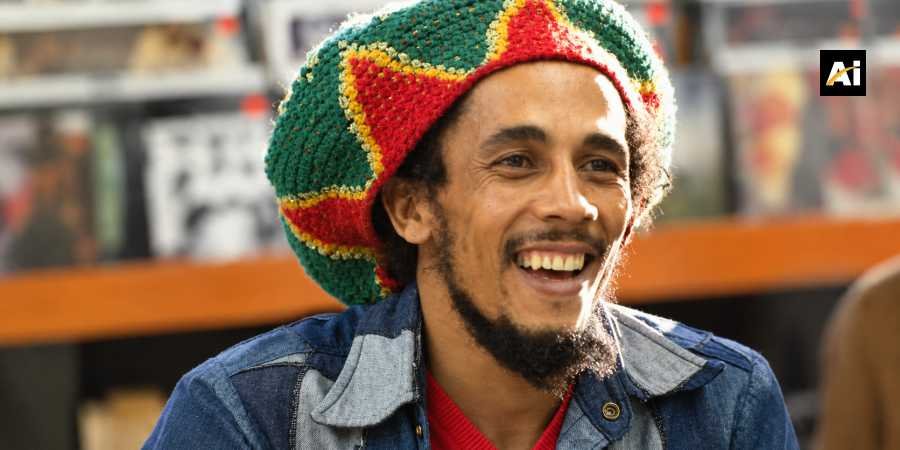
Reggae was never only about rhythm. At its most powerful, it carried history, faith, frustration and hope across borders, turning experiences of inequality and displacement into music that people could sing together. Few artists made that connection more visible than Bob Marley. His songs reached audiences far beyond Jamaica, yet their emotional force remained rooted in questions of freedom, identity, justice and human dignity. That is why Bob Marley Songs continue to appear in conversations about protest music, cultural identity and social change decades after his death.
Marley’s importance also came from the way he balanced resistance with reconciliation. A song could challenge oppression in one moment and speak about love and unity in the next. His catalog was not politically uniform or limited to protest. Instead, it moved between spiritual reflection, romance, African identity and calls for collective action. That range helped reggae become accessible to listeners who might not have approached explicitly political music.
Bob Marley Songs and the Roots of Resistance
The Wailers’ early recordings developed during a period when Jamaican popular music was changing rapidly. Ska and rocksteady were giving way to reggae, while Rastafari provided Marley with a spiritual and cultural framework that deeply influenced his writing. Smithsonian research on Rastafari describes the movement as both a religious tradition and a broader cultural and political force centered on African identity, liberation and belonging.
“Get Up, Stand Up,” written by Marley and Peter Tosh and released on the Wailers’ 1973 album Burnin’, became one of the clearest examples of music being used as a call to action. The Recording Academy inducted the song into the GRAMMY Hall of Fame in 1999, making it the first reggae recording to receive that recognition. The song did not present resistance as an abstract political theory. Its language was direct, giving listeners a musical framework for thinking about rights and personal agency.
That directness became one of the defining characteristics of Bob Marley Songs. Marley could take large questions about colonialism, racial inequality and political power and turn them into language that worked equally well in a concert hall, on the radio or among people gathered in the street.
“War” Connected Music With Global Inequality
Another important example is “War,” released on the 1976 album Rastaman Vibration. The song drew from words associated with Ethiopian Emperor Haile Selassie and addressed racial discrimination and inequality. Its message connected Jamaican reggae to a much wider African and diasporic political consciousness. Smithsonian’s research on Rastafari notes that Selassie’s ideas about liberation and African identity were central to the movement and became important elements in Marley’s music.
This international dimension helped reggae travel differently from many other forms of popular music. Marley was singing from Jamaica, but listeners elsewhere could recognize their own struggles in the themes. His music subsequently became associated with anti-apartheid activism in South Africa and liberation movements in Africa. The official Bob Marley archive records the powerful reception of the Wailers’ performance at Zimbabwe’s independence celebrations in 1980, when thousands gathered outside Rufaro Stadium to see musicians whose work had inspired the liberation struggle.
The significance of Bob Marley Songs therefore cannot be separated from the political history surrounding them. They became part of movements, but their meaning was not confined to one country or one political campaign.
Bob Marley Songs Could Also Bring Opposing Sides Together
Marley’s relationship with Jamaican politics illustrates another side of his influence. During the country’s violent political tensions in the 1970s, Marley was asked to headline the Smile Jamaica concert in December 1976. Two days before the event, he, Rita Marley and others were shot at his Kingston home. Despite the attack, Marley went ahead with the concert.
His later appearance at the One Love Peace Concert in April 1978 became an even more enduring image of music as reconciliation. During the performance, Marley brought political rivals Michael Manley and Edward Seaga together onstage and raised their hands. The moment became closely associated with his effort to reduce political division, and he received the United Nations Peace Medal of the Third World later that year.
From “Exodus” to “Redemption Song”
The 1977 album Exodus brought several of these ideas together. Recorded after Marley left Jamaica following the 1976 shooting, the album combined revolutionary themes with songs centered on love and spiritual reflection. The Recording Academy notes that Exodus blended reggae with elements of rock, soul and funk, and that the album eventually entered the GRAMMY Hall of Fame in 2006.
Its sequencing itself reflected the breadth of Marley’s thinking. “Exodus” and “Guiltiness” carried political and revolutionary weight, while “Jamming,” “Three Little Birds” and “One Love/People Get Ready” offered a more hopeful emotional register. That contrast became central to how audiences understood Bob Marley Songs. Resistance did not have to mean permanent anger. Hope could exist beside criticism.
“Redemption Song,” released on Uprising in 1980, took the idea of liberation inward. Stripped largely to Marley’s voice and acoustic guitar, it sounded different from the fuller reggae arrangements associated with much of his catalog. The song later became one of his most widely recorded compositions, with artists including Joe Strummer, Bono, Sinéad O’Connor, Rihanna and Angelique Kidjo recording their own versions.
Its continued reinterpretation shows how Marley’s music moved beyond its original setting. Artists and communities have repeatedly used his songs to express their own experiences of freedom and inequality. Smithsonian has even documented a Dalit American reinterpretation of “Redemption Song” connected to movements against caste oppression, illustrating how Marley’s themes have been adapted to struggles far outside Jamaica.
Why the Message Still Travels
The lasting influence of Bob Marley Songs comes partly from their simplicity. Marley rarely needed complicated musical structures to make an idea memorable. Reggae gave him a steady rhythmic foundation, while his lyrics could move between spiritual language and everyday speech. That combination allowed the songs to function both as personal reflections and communal anthems.
His son Ziggy Marley has also spoken about this duality, pointing out that audiences sometimes focus heavily on “One Love” and “Three Little Birds” while overlooking the more confrontational side represented by songs such as “Get Up, Stand Up” and “Blackman Redemption.” That observation captures an important part of Marley’s legacy. The peaceful image and the revolutionary voice were not separate versions of the artist. They existed together.
Bob Marley Songs remain powerful because they ask listeners to hold those ideas together. Unity does not require ignoring injustice, and resistance does not necessarily have to reject compassion. His music offered a language in which freedom, African identity, spirituality, equality and love could occupy the same space.