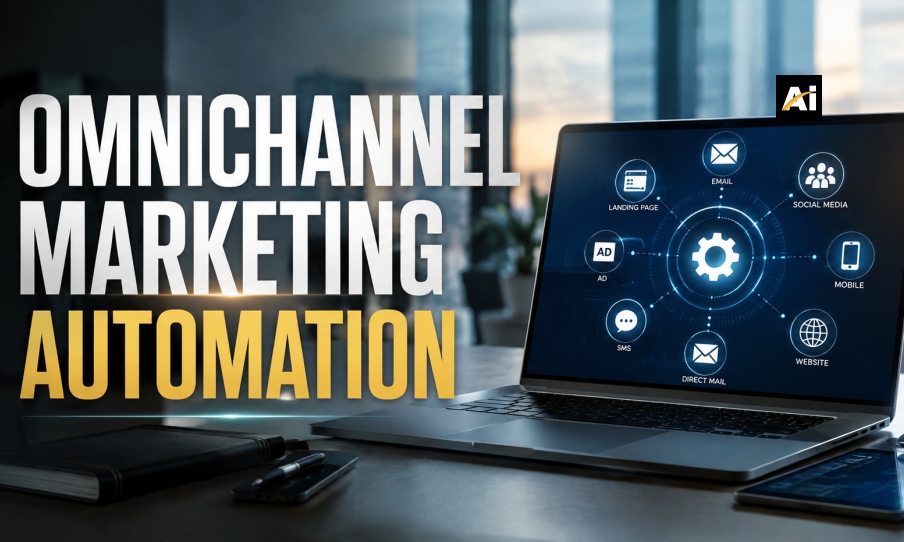
Customers nowadays interact with companies in various ways and through different means before purchasing a product or service. For example, a customer could search for information on social media, visit the company’s website, receive an email, and read reviews before deciding to make a purchase through an application. Due to the complexity and diversity of customers’ behavioral patterns, traditional marketing approaches are becoming ineffective. Omnichannel marketing automation is a great opportunity to manage interactions with clients by providing the required communication at the right moment and through the right channel.
Instead of managing different marketing activities for email, social media, the company’s website, applications, and other channels separately, businesses can create an omnichannel customer journey. It means that organizations can automatize and personalize the communication flow with clients without spending a lot of time on managing these campaigns and constantly checking what customers need at a specific moment. In other words, omnichannel marketing automation is helpful in engaging clients and bringing businesses closer to the customers with personalized communication. It is especially important for modern companies as they compete for clients’ attention.
As omnichannel marketing automation aims to bring together various marketing activities, it is necessary to understand how they help build a customer journey. First, an organization should remember that clients are unique, and their behaviors and patterns cannot be predicted. For example, some customers could follow the same journey, but others would choose different paths. For instance, a customer could see an advertisement on social media and then go to the company’s website to make a purchase. However, not all people would behave the same way. That is why it is essential to provide seamless communication and make sure that clients receive the necessary information at a certain moment. For instance, if a customer receives an email from the company, but they previously saw an advertisement on social media, they are likely to get confused.
An automated system can recognize these interactions and adjust subsequent communication accordingly. For example, a customer who abandons a shopping cart could receive a reminder through email, while another customer who has already completed the purchase could receive product recommendations instead. This creates a more coherent experience because communication reflects the customer’s current relationship with the brand.
The objective is not simply to communicate across more channels. It is to make those channels work together. When customer data and campaign activity are connected, businesses can understand the broader journey rather than focusing on isolated interactions.
Personalization at Scale
Personalization has become an important part of modern marketing. Customers increasingly expect brands to understand their preferences and provide communication that feels relevant. However, creating individualized experiences for thousands or millions of customers manually is practically impossible.
Automation makes large-scale personalization more achievable. Businesses can use customer behavior, purchase history, browsing activity, demographics, and engagement patterns to determine what type of content should be delivered. A customer interested in a particular product category might receive educational content about that category, followed by relevant offers when their engagement indicates stronger purchase intent.
This approach also allows businesses to create different customer journeys based on specific actions. A new subscriber can receive an introductory sequence, while an existing customer may enter a loyalty campaign. Customers who have stopped engaging can receive re-engagement messages designed to bring them back.
With omnichannel marketing automation, these personalized interactions can happen across multiple platforms while maintaining a consistent brand message. The result is a customer experience that feels less like a series of disconnected advertisements and more like an ongoing conversation.
Improving Marketing Efficiency and Performance
Managing campaigns across several channels can consume significant time and resources. Marketing teams may otherwise spend hours scheduling messages, monitoring customer responses, organizing data, and moving customers between different campaign stages. Automation reduces much of this repetitive work.
Once workflows are properly designed, routine activities can happen automatically according to predefined conditions. A customer completing a purchase can trigger a confirmation message, followed by onboarding content and eventually a product recommendation. Similarly, a customer who has not interacted with the brand for a certain period can automatically enter a re-engagement campaign.
Automation also gives marketers more opportunities to measure campaign performance. Instead of evaluating individual channels separately, businesses can analyze how different interactions contribute to the overall customer journey. Metrics such as engagement, conversions, customer retention, and revenue can provide a clearer picture of what is actually working.
This information can then be used to improve campaigns. If customers consistently respond positively to certain types of content but ignore others, marketers can adjust their messaging and targeting. Over time, these insights can make marketing strategies more efficient and data-driven.
Building Stronger Customer Relationships
Technology alone does not create meaningful customer relationships. The real value of automation comes from using technology to make communication more timely, relevant, and consistent. Businesses that focus exclusively on sending more messages can quickly overwhelm their audiences. Effective automation should instead determine when communication is useful and when silence is the better option.
A well-designed omnichannel strategy can help businesses maintain relationships beyond the initial purchase. Customers can receive useful educational content, personalized recommendations, loyalty rewards, service updates, and reminders based on their individual interactions with the brand. Such communication can strengthen familiarity and encourage repeat engagement.
As customer expectations continue to evolve, businesses will need to think beyond individual marketing channels. The future of customer engagement will increasingly depend on how effectively brands connect data, technology, and communication into a unified experience. Omnichannel marketing automation provides the infrastructure needed to make that possible.
Ultimately, successful marketing is not about being present everywhere simply for the sake of visibility. It is about being present where customers are, understanding what they need, and delivering the right message at the right stage of their journey. When automation supports that objective, businesses can improve operational efficiency while creating customer experiences that are more consistent, personalized, and valuable.