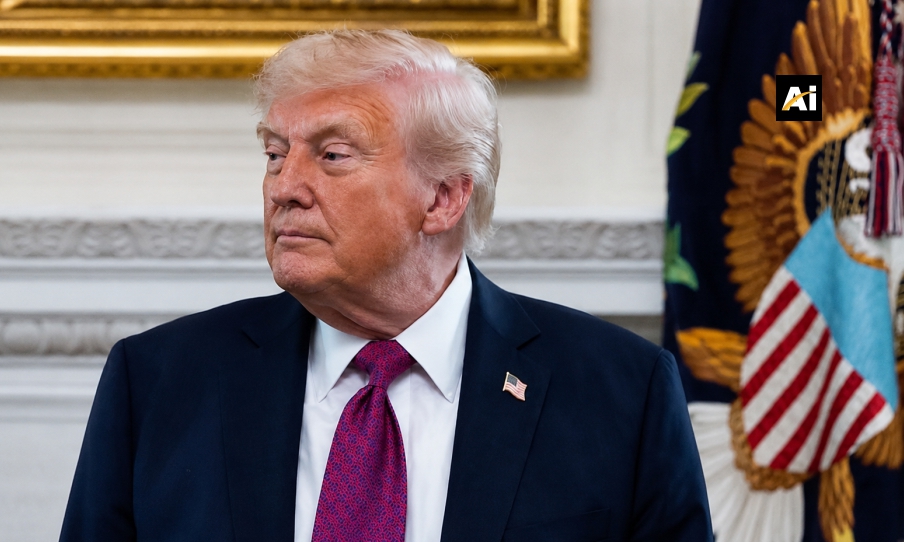
The intersection of the aging of political figures, authority, and cognitive function is one of the USA’s most contentious issues. The public scrutiny of politicians’ behavior when they are in the process of gaining power and staying in the office is at its peak. The figure, whose behavior is being analyzed, can be any of the presidential candidates or the current president himself. At the moment, the central figure in this context is, of course, Donald Trump. His actions, slips of tongue, and behavioral trends are at the center of heated debates both on late-night talk shows and in social media. The reason why this particular aspect of the presidential campaign has grabbed public attention so quickly requires further examination. Why has the phrase trump dementia started gaining traction in the national consciousness?
Why is the Cognitive Function of the President so Intriguing?
As history tells us, the public scrutiny of the presidential cognitive functions is nothing new. However, the current situation in the USA has made it more intense than ever before. Experts note that the presidential candidates are particularly vulnerable to such an inquisition. This vulnerability is fueled by the public’s growing awareness of issues related to Alzheimer’s disease, which often makes people speculate about the potential candidates who may not be as clever as they appear on the campaign trail. It seems that the moment one candidate begins to show signs of mental decline, the other is quick to follow suit, pointing it out in order to gain an advantage. The moment trump dementia becomes a common phrase in the media, it means that the public has noticed that the rhetoric of the president has begun to change. A lot of his supporters would say that this shift is part of the charm, as it makes him seem more like himself, which he is, perhaps, intentionally. On the contrary, those who oppose him will be quick to state that this transition is an undeniable sign of the beginning stages of dementia, providing them with ample material for further criticism of the president’s mental state.
Medical Ethics and the Dangers of Public Speculation
The escalation of this public conversation raises profound questions about medical ethics and the responsibility of public commentators. Diagnosing any neurological condition requires rigorous, in-person clinical evaluation, which is why mainstream medical organizations heavily discourage public figures from being labeled from afar. Despite these professional boundaries, public interest in potential signs of trump dementia continues to grow, fueled by independent psychological groups who argue that public transparency overrides traditional professional restraint. This tension creates a difficult environment for everyday citizens trying to separate genuine neurological analysis from hyper-partisan political theater. When every single physical stumble, momentary verbal confusion, or late-night social media post is viewed through the lens of a severe medical diagnosis like trump dementia, the actual science of aging and cognitive health risks being completely obscured by political bias.
How Partisan Echo Chambers Amplify Clinical Terms
The modern media ecosystem is highly optimized for sensationalism, making it an incredibly effective tool for spreading loaded medical concepts. Within progressive media circles, regular deep dives into the concept of trump dementia serve to validate existing concerns about institutional stability and executive leadership. Conversely, conservative platforms routinely dismiss the entire discussion as a coordinated smear campaign designed to distract from policy matters, pointing instead to historical cognitive test performances as proof of baseline fitness. This sharp division ensures that the phrase trump dementia functions less as a genuine clinical discussion and more as a powerful political shorthand used to reinforce pre-existing partisan beliefs. Because neither side can agree on what constitutes a normal aging process versus a pathological condition, the narrative remains locked in a perpetual cycle of mutual accusation and defensive spin.
Cultural Impacts of Politicizing Cognitive Decline
Beyond the immediate political implications for the White House, the hyper-fixation on the term trump dementia has broader societal consequences for how the public views aging and neurological health. When complex, heartbreaking conditions like progressive cognitive decline are used as everyday political insults, it can inadvertently deepen the social stigma surrounding families who are dealing with real-world diagnoses. The constant weaponization of the possibility of trump dementia reduces a deeply nuanced medical reality into a series of aggressive soundbites, making it harder to have productive national conversations about aging leadership. As long as political fitness is evaluated through highly polarized media lenses rather than objective medical transparency, the speculative debate over trump dementia will likely continue to dominate the American political landscape, shifting definitions of power and health for years to come.