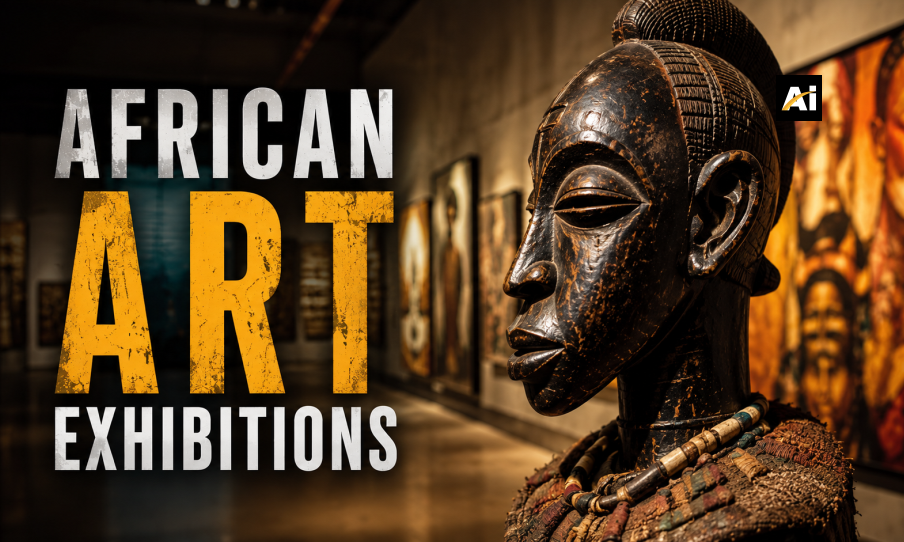
Right now, art around the world is changing fast – african art exhibitions getting huge attention fuel this shift. A while back, work from Africa barely showed up in mainstream Western stories about art, often stuck behind glass labeled as artifacts instead of seen as bold creations (Pawłowska, 2020). That old view? It’s gone now. Big-name galleries, major festivals, top museums across continents keep adding exhibits focused on African art, old and new alike. Not just a spike in sales or interest – it’s like redrawing the map of what matters in culture, putting African makers right in the spotlight where they belong. These evolving african art exhibitions are also reshaping how global audiences understand identity, history, and creative freedom.
Dismantling the Ethnographic Gaze Reclaiming Spatial Sovereignty
Long ago, museums in the West often misunderstood African art. Not seen as creation but as odd relics, they lost their true meaning when labeled only as cultural samples (Pawłowska, 2020). Today’s exhibit designers think differently – entirely turning away from old views. Instead of treating such works like objects from another time, many now place them in galleries meant for serious visual dialogue. Because of this change, what once appeared static and distant is shown alive, layered, aware of itself (Ashley, 2005). Many contemporary african art exhibitions are intentionally designed to challenge colonial narratives and encourage deeper engagement.
One clear sign of change shows up when famous museums rethink how they arrange spaces and displays, honoring where artworks truly come from. Instead of letting only Western views decide what matters, today’s exhibits open space for people to meet art on its own ground. Big retrospectives, along with bold choices in curation – like placing old African works face-to-face with European masterpieces – show these pieces carry ideas strong enough to cross narrow historical lines (Pawłowska, 2020). With fresh ways of seeing built into gallery walls, African creators now stand not at the edge, but at the core of humanity’s cultural story (Ashley, 2005). Such curatorial shifts have become defining features of major african art exhibitions worldwide.
The Rise of Mega Shows and Intercontinental Biennials
The remarkable ascent of African art on the global stage is intimately tied to the evolution of international “mega-shows” and competitive biennials. Platforms like the Venice Biennale, Documenta, and the Berlin Biennale have increasingly become battlegrounds for representation and intense conceptual debate, largely shaped by the visionary work of groundbreaking African curators (Siatka, 2026). The legacy of pioneering figures has permanently altered these institutions, forcing them to open their doors to an unprecedented number of artists from the continent and its global diaspora (Dakin, 2019). These internationally recognized african art exhibitions continue drawing collectors, critics, and scholars from around the world.
The impact of this institutional evolution was made undeniably clear by historic milestones, such as the critically acclaimed debut of the Ghanaian Pavilion at the 58th Venice Biennale in 2019, which featured structural heavyweights like sculptor El Anatsui and portraitist Lynette Yiadom-Boakye (Dakin, 2019). These platforms provide an expansive stage where artists can confront complex global themes head-on. No longer bound by regional expectations, contemporary creators utilize their space at these international exhibitions to explore the multifaceted realities of modern life, seamlessly blending local traditions with cutting-edge global trends. In many ways, these african art exhibitions have become cultural bridges between continents and generations.
Echoes of the Diaspora and the Politics of Materiality
One of the most compelling characteristics defining contemporary african art exhibitions is the brilliant manipulation of unconventional materials to articulate themes of displacement, memory, and colonial resistance. Artists frequently utilize found objects, industrial detritus, and everyday consumer waste to build intricate, large-scale installations that tell deeply personal stories. For instance, the legendary artist El Anatsui achieved massive international acclaim, including the prestigious Golden Lion for Lifetime Achievement at the Venice Biennale, through his monumental tapestries woven meticulously from discarded aluminum bottle tops and copper wire (Dakin, 2019; Foster, 2023). These awe-inspiring, shimmering sculptures mirror the visual language of traditional Ghanaian Kente cloth while simultaneously offering a sharp critique of global consumerism, historical trade routes, and the complex mechanics of dependency (Foster, 2023). Such experimental approaches are now central to many influential african art exhibitions.
Similarly, modern exhibitions frequently illuminate the profound, unbreakable connections binding continental African artists with the global Black diaspora. Recent collaborative showcases spanning multiple continents highlight a shared, pan-African creative insurgency (Ayobade, 2026). Through a dynamic mix of satirical video installations, immersive digital media, and photography, these curated spaces explore how identity is continuously constructed, forgotten, and fiercely reclaimed across oceans (Ayobade, 2026). By highlighting these complex artistic exchanges, modern exhibitions create a vital, living arena where global histories are actively confronted, challenged, and rewritten for the future. The growing influence of african art exhibitions proves that African creativity is no longer viewed as peripheral but as essential to contemporary global culture.
Read Also : The Global Rise Of The African Fashion Industry And Its Cultural Impact