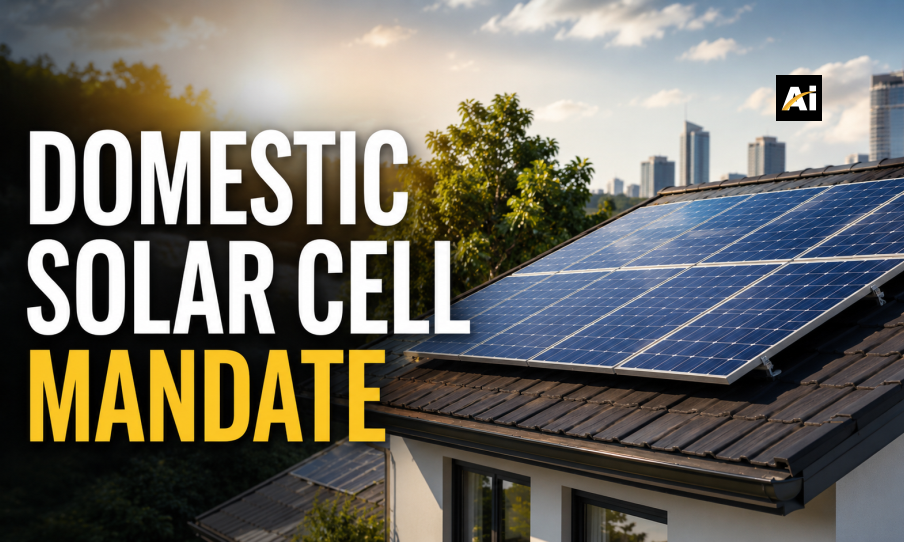
One shift changing how countries handle power comes from pushing cleaner sources, making them rebuild where they get materials. Instead of waiting, some now insist that solar panels used in new projects must come from factories inside the country. This rule pushes leaders to grow homegrown industries, keep supply lines safer during world tensions, while depending less on foreign deliveries. Even if building strength at home makes sense down the road, starting such rules right away forces builders and makers to adjust fast under pressure. Moving quickly to install systems meets hurdles when every part must be sourced nearby, calling for close looks at costs, skills available, and what technology actually exists here.
The Reason Industries Follow Sourcing Rules
A rule requiring homegrown solar cells can spark big economic change, pushing a nation beyond just putting together green tech parts toward actually building them from the ground up. While plenty of areas once had factories ready to package full solar panels, they still relied heavily on overseas sources for the key pieces – those tiny semiconductors turning sunlight into power. Once such a policy takes hold, it pulls investment like a magnet, drawing huge sums into facilities that produce these crucial cells locally. Money earned from the clean energy boom then stays closer to home instead of flowing abroad. Skilled workers find new roles in modern plants, ideas evolve faster, progress roots itself where it’s made. One reason companies invest in big solar panel factories is knowing there will be steady homegrown demand. Because rules require rooftop panels on new homes, manufacturers can plan years ahead. This stability means they do not guess whether anyone will buy what they make. When production ramps up, costs go down naturally. Lower costs help these firms sell beyond borders without relying on subsidies. Steady policy turns local effort into worldwide reach – quietly, steadily, without fanfare.
Immediate Hurdles in Supply and Technology
Despite the clear strategic advantages, the sudden enforcement of a domestic solar cell mandate often exposes a significant structural mismatch between local cell manufacturing capacity and the broader demand for complete modules. When a domestic solar cell mandate takes effect, module manufacturers who previously sourced affordable components globally must suddenly pivot their supply chains to certified local entities. This transition frequently reveals that the local cell output can only satisfy a fraction of the total assembly demand, leaving independent module makers scrambling for materials. The scarcity is particularly acute in cutting-edge high-efficiency technologies like Tunnel Oxide Passivated Contact cells, which have quickly become the industry standard for modern installations. Because a domestic solar cell mandate restricts access to established foreign supply lines, local developers face prolonged procurement timelines and project backlogs while domestic factories work tirelessly to scale up their production capabilities. This operational bottleneck highlights the delicate tightrope walk between pushing for immediate industrial self-sufficiency and maintaining the steady momentum of national renewable energy installations.
Financial Repercussions and Market Consolidation
The financial impact of a domestic solar cell mandate is felt immediately across the pricing structures of clean energy projects, creating noticeable short-term cost pressures. In the initial phases of a domestic solar cell mandate, locally produced components often command a substantial price premium compared to highly subsidized international alternatives. This cost differential directly inflates the capital expenditure required for utility-scale developments, commercial installations, and residential rooftop projects. For project developers operating on thin margins, a domestic solar cell mandate can alter initial return-on-investment calculations and lead to friction regarding power purchase agreements. Consequently, this evolving economic landscape triggers a natural consolidation within the clean energy sector. Large, vertically integrated entities that handle both cell manufacturing and module assembly tend to thrive under a domestic solar cell mandate, whereas smaller, policy-dependent assemblers face intense financial strain. Ultimately, this consolidation reshapes the market into a more stable, capability-driven ecosystem, even if the initial transition demands a higher financial investment from the entire value chain.
Managing the Path to Energy Independence
Navigating the implementation of a domestic solar cell mandate requires a supportive and adaptive regulatory framework that balances strict compliance with practical market realities. Rather than enforcing an inflexible blanket timeline that could stall ongoing infrastructure developments, authorities often introduce case-by-case extensions and project-specific relaxations for investments that were already underway before the policy took effect. This balanced approach protects existing capital commitments while firmly signaling that all future clean energy expansions must align with the domestic solar cell mandate. As local manufacturing capacity continues to expand and mature, the initial supply deficits and pricing premiums are expected to stabilize, eventually giving rise to a highly competitive, self-sustaining renewable energy sector. By persisting with a domestic solar cell mandate while offering targeted transitional relief, a nation can successfully insulate its green energy infrastructure from external economic shocks, securing both its environmental objectives and its industrial future.