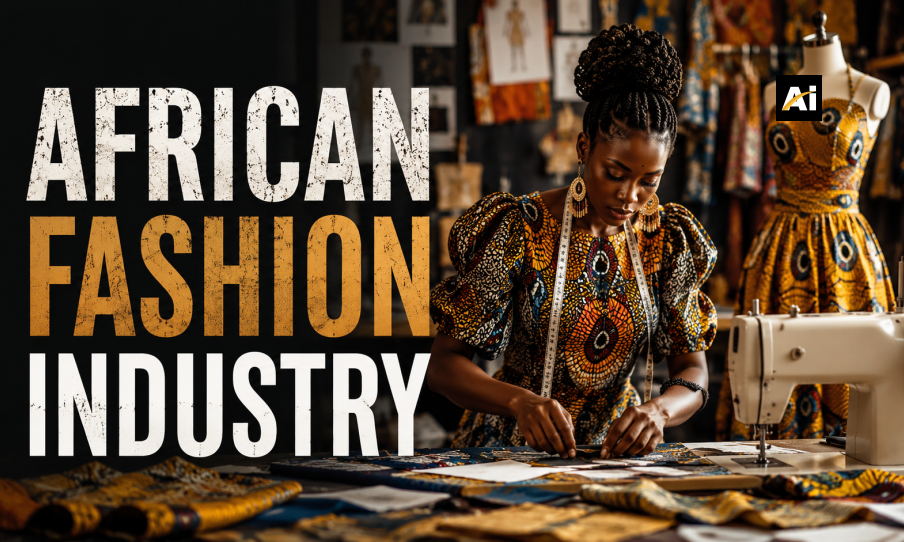
Years passed with world fashion watching just a handful of European cities set rules for look, trend, taste. Now things tilt differently as attention drifts to fresh sources of invention. From far corners, African design rises beyond regional pride to stand firm on international ground. More than fabric stitched together, this change reshapes how people see a whole continent’s voice. Powered by youth fluent in online life and deep roots in tradition, creators from Africa step boldly into modern style’s spotlight.
You can see this change happening both on world fashion stages and in money predictions. By 2030, the wider African fashion industry could reach fifty billion dollars. Design leaders from Lagos, Johannesburg, and Accra now show up regularly at top global events – leading instead of just joining. What’s unfolding moves past selling unprocessed materials, turning toward crafted goods rich in meaning. Style made here speaks boldly outside Africa too.
Storytelling in Modern Textiles
Deep inside this growing wave sits a real drive to tell true stories through fabric. For years, global fashion saw African clothing as one look only – mostly mass-produced wax prints. Now, modern makers from Africa are breaking that old mold, digging up heritage weaves and giving them new life. Take Kente from Ghana, or Nigeria’s Aso Oke – each piece built slow by hand. These materials stand apart from quick-turn western trends that fade fast. Meaning lives in every thread, every color choice, shaped by memory, place, identity. The cloth holds more than style – it carries time.
It’s the mix of old roots and city life that pulls people in. Not just fashion, but shape matters – think bold Ankara bombers meeting sharp lines. Some wear oversized coats, others choose long dresses cut on angles. Around the world, young buyers respond to both story and substance. Clothes become more than fabric when they carry meaning forward. Style shifts, yet history stays visible through each stitch. What you put on can quietly speak volumes.
Digital Acceleration and the New Retail Experience
The rapid ascent of African fashion on the world stage is inextricably linked to the digital revolution. In the past, talented creators faced steep structural barriers, including limited local financing and restricted access to physical international distribution networks. The explosion of social media platforms and mobile commerce has effectively bypassed those old gatekeepers. A striking design conceptualized in a home studio in Dakar or Nairobi can now go viral on TikTok or Instagram within hours, instantly attracting orders from African fashion industry enthusiasts in New York, London, or Tokyo.
Furthermore, the integration of advanced technology is rewriting the retail experience across the continent. Creators are leaning into digital marketing innovations, utilizing highly tailored micro-influence campaigns, automated customer engagement via widespread messaging apps, and interactive live shopping events. On the production side, there is an increase in digital by-products, including wearable technology and virtual showrooms. This digital agility has enabled independent labels to maintain financial stability and manage inventory efficiently, proving that African fashion brands are just as tech-savvy as they are creative.
Sustainability as a Native Design Principle
As the global fashion sector faces intense scrutiny over environmental degradation and exploitative supply chains, the African fashion industry offers a refreshing, regenerative alternative. While Western brands are actively trying to retroactively implement eco-friendly practices, sustainability has long been embedded in the African fashion industry. Many designers inherently rely on small-scale, localized production models, sourcing organic raw materials like locally grown cotton and utilizing plant-based, biodegradable dyes.
This conscious approach to creation naturally aligns with the global shift toward slow luxury and circular fashion. Upcycling and pre-order business models are common strategies utilized to eliminate material excess and minimize waste. The emphasis is placed firmly on craftsmanship, longevity, and respecting the human hands involved in the production process. By supporting community-based weaving cooperatives and preservation-focused workshops, the African fashion industry demonstrates that luxury does not have to come at the expense of the planet or the people who inhabit it.
Overcoming Obstacles and Navigating Future Growth
Despite the undeniable creative success and surging global demand, the path forward requires addressing significant structural hurdles for African fashion industry. The continent produces an abundance of raw materials, with dozens of nations cultivating premium cotton, yet a notable portion of these resources is still exported raw rather than being processed locally. For the African fashion industry to fully capture its financial potential, there must be sustained investment in domestic manufacturing infrastructure, regional spinning mills, and accessible specialized design education.
Fortunately, the framework for this industrial evolution is taking shape. The implementation of the African Continental Free Trade Area is proving to be a monumental game-changer by gradually reducing internal tariffs and encouraging cross-border collaborations. This economic integration allows for regional value chains where raw materials from one country can be seamlessly woven in another and finished into premium garments in a third. As governments and private investors realize the massive economic viability of the creative sector, the African fashion industry is stepping firmly into a future where it no longer just participates in the global style conversation, but actively leads it.